Showing posts with label action. Show all posts

Wednesday, May 8, 2019

Starcrash (1978), by Luigi Cozzi


It's time.

As far as I understand, Starcrash is an equal of Troll 2 and Birdemic as far as Famous Bad Movies go. Maybe it's not as famous--but until Troll 2 kicked off its reign as a Bad Movie Prince, Starcrash was possibly the most famous Bad Movie made by someone from Italy. Nearly everything about Starcrash is done badly in some way, but the cohesive whole is never annoying or agonizing. Far from it--the film is pure trash fun, in a nearly classical sense, and some parts are even done (mostly) well. Of course, there's the fairly obvious caveat--see that title? See that release year? Hope you're ready to take the fast train to Cashinsville.

This movie opens with a shot which has by now become classic--thanks to a different movie. Hmm, what other science fantasy motion picture came out in the late '70s that opened with a spaceship flying away from the camera, descending off the top of the screen? The name escapes me at present. Anyway, our decently impressive starship is manned by a bunch of guys who look like the Time Lord Chancellery Guards from Doctor Who. We will learn later that they serve the Galactic Emperor...who is a good guy in this one! See, this movie is totally original. The Imperial crew are wiped out by flashing red lights, which the film's characters insist on calling "red monsters." Um, sure. They use the same effect to make the stars of the space scenes, changing the red lights to white. Anyway, after the rampage of the "red monsters," we cut to our heroes, smugglers Stella Star and Akton. They are on the run from the Imperial authorities, represented by a green, bald, human-like alien named Thor and a robot named L. Thor's green skin ends at his neck in some shots, and L speaks with a Yosemite Sam accent. Later, he'll turn out to be a coward because they couldn't have him roll around and speak in beeps. Stella and Akton escape but end up at the border of "the Haunted Stars," a deathzone of uncharted cosmic territories. Here, they find the Imperial ship, with a single survivor left aboard. Before he dies, Akton reads his mind, because as we will learn wayyyy later in the movie, Akton has the Force PSYCHIC POWERS. Stella and her friend contemplate contacting the Emperor to let them know what happened on one of his missions, because they are the Good Samaritan sort of smugglers. The choice is removed from their hands when it turns out Thor and L managed to track them after all. They are arrested and tried by what I swear to God is the thing from the end of the 1953 Invaders from Mars, stolen wholesale and dubbed and greenscreened over. What's weird about this trial is that the not-Martian sentences Stella to 200 years hard labor, but then sentences Akton to life imprisonment as well as hard labor. This is odd because normally 200 years is a life sentence, but this is the future, so who knows.

Speaking of the future, did you know that leather bikinis will become standard for female prison laborers in the centuries yet to come? Well, actually, it's just for Stella Star. Don't know what makes her special, but she'll keep on wearing this outfit for damn near the rest of the movie. There are multiple opportunities for her to change, but she just sort of doesn't. I guess it would be comfy if you did a lot of running on planets where modesty wasn't a huge issue. Stella is surprised when Thor and L show up to collect her--she and Akton are no longer the Emperor's prisoners, but his guests. They were the ones who met the dying guard, after all, which gives them at least a tangential reason to meet with the ruler of the galaxy. The Emperor--whose privileged, uncertainly-ironic air gives him a strange resemblance to Prequel Palpatine--asks Stella, Akton, Thor, and L to go into the Haunted Stars and looks for the "phantom planet" of his evil counterpart, the wicked Count Zarth Arn. Indeed, it was Zarth Arn who sent the "red monsters" to attack the Imperial ship, which was one of several being sent into the Stars to combat the Count under the command of the Emperor's son. As with all the crew of all the ships who sought Zarth Arn's planet, the Prince has been lost, and the Emperor fears the worst. Stella promises to bring him back one or another, and the quartet leaves, with all prior grudges seemingly erased.

The first planet they go to sets up a formula which will follow for much of the rest of the film. Stella and L take the ship's shuttle down to the planet, while Akton and Thor stay aboard and uh. Tend to the machinery, I guess. Or maybe they "tend to the machinery"--hey, it's a great way to deal with boredom. When we do cut to Akton in the ship, he's practicing making plasma rings or something with his psychic powers. As she explores the beach, Stella utters one of the best lines of a movie made up of best lines: "Oh my God! Amazons on horseback!" L's reply is relaxed, despite his newly-acquired and oft-proclaimed nervousness: "I hope they're friendly." They are not. They take the pair back to their queen, an ally of Zarth Arn's, and when they try to escape they attack L en masse. This movie is another occasion outside of Death Note where I must be careful spoiling that L dies. Except not really--he just gets back up and saves Stella, but not before the smuggler learns from the Amazon queen that Zarth Arn's planet is protected by two guardians. The movie does remember this later, but the payoff is really stupid. Stella and L try to go back to the ship, when they are attacked by--and I'm not kidding here--a giant humanoid stop-motion robot with enormous spherical tits, complete with giant blown-out industrial nipples. The not-Harryhausen creature stumbles after them but they manage to get away safe and sound. Of course, they have to shoot down some Amazon fighter ships along the way, in a sequence which is similar to the TIE fighter scene from A New Hope in spirit if not in totality.

The next planet is an ice-world, just like in Star W--wait, hold on. This movie came out before The Empire Strikes Back. Surely it's just a coincidence, and not an instance of George Lucas having seen this movie. Anyway, it turns out Thor is a traitor, and he plans to leave Stella and L on the planet to die, after having seemingly killed Akton with a single karate chop. Akton is a little bit stronger than that, though, and shoots lasers out of his hands to kill Thor (making a creepy murder-face in the process); he saves Stella and L, but not before they have a genuinely cute bonding moment where they call each other friends and reminisce about how far they've come since the days of fighting each other. It turns out Akton knew Thor would betray them because he has future-vision. When Stella reasonably asks, "Why did you never tell me about this before?" his reply is totally amazing: "Because if I told you the future, that would be changing the future, and that is against the law." (Emphasis mine, but some words don't need to be spoken intensely to be emphatic.) I assume this is a weird dubbing thing, and they mean, like, the laws of reality, but I love the idea of the Emperor meticulously studying the future and then enforcing its flow no matter what, including the parts of it which don't go well for him, and dispatching time-cops--dressed perhaps even more ludicrously than their chronally-bound counterparts--to punish those who try to change the future. All while pretending not to know what's going on.

In orbit over the third planet, the heroes' ship is attacked by the "red monsters," but Akton reveals that they are actually a psychic illusion. While on the planet, Stella and L are attacked by cavemen. While the pair hold their own, the cavemen are great in number, and they attack L en masse. This movie is another occasion outside of Death Note where I must be--oh goddamnit! This movie needs to stop repeating itself. This time, L is really, truly dead, at least for now. Stella has been kidnapped and is about to be cooked and eaten when she is rescued by a figure in a fish-man mask. He takes the mask  off of his head, and reveals his true identity: DAVID HASSELHOFF. Again, I am not kidding, it is actually Hasselhoff. Hasselhoff with a fuckton of eyeliner, no less. This is Simon, and he is the only surviving Imperial from the original wave of ships that entered the Haunted Stars. He and Stella run into Akton, who whips out a lightsaber (there's no other name for it) and cuts down the cavemen who were chasing them. He then says that the red monsters and the cavemen were the twin guardians spoken of by the queen of the Amazons--thus, the planet which contained the last survivor of the Emperor's mission was conveniently also the base of Zarth Arn's they were looking for. Those are not interesting guardians, although the Count has a pair of really shitty stop-motion robots to protect him--a simple dialogue transplant would have fixed some things, because it's more likely to me from a story perspective that these robots are the guardians, and not two unrelated, random menaces. It turns out that Simon is, of course, the Prince, and the Count is using him as bait to come to the phantom planet--whereupon he will blow it up in his face, killing the galactic ruler alongside his son and the two smugglers. But Akton breaks loose and kills the robots with his lightsaber, sustaining fatal injuries in the process. He refuses to save himself because changing the future is against the law and everything. But he dies giving the universe a better chance.

It seems that Stella and Simon are doomed to die anyway, because they can't escape the planet--however, the Emperor appears and announces he has powers of his own. At that, he commands: "Imperial Battleship...stop the flow of time!" That ship can suspend time, alright, but it can't suspend my disbelief. The Emperor announces the final plan, which involves crashing his flying city into Zarth Arn's fleet--a Starcrash, as it were. The last battle begins, pitting good against evil in a fight to the death.

Starcrash does its best to do good with plundered loot. While there are countless scenes and moments shamelessly plucked from the vine that grew from Star Wars, the sets and costumes usually have some sort of creative image apparent in them. It is entirely possible that the design team had seen episodes of Doctor Who, as that aesthetic is present too. There are odd European touches here, as well as Flash Gordon. Yet all of these elements work in their own pulpy goofiness--this is a space opera, after all, and opera is nothing if not garish. This movie is surprisingly sexless for an Italian film of this vintage. But like the model it "borrows" from, Starcrash is more concerned with an unquestioning, un-cynical world which could appeal to children as well as adults, rather than the universes of anything that the Umberto Lenzis and Bruno Matteis of the world would ordinarily turn out. Hope is valuable in Star Wars, and that Starcrash preserves the hopeful atmosphere of its better counterpart is vital. It's a bit easier to believe in the cheapness, because at no point do you feel that the characters would get annoyed watching their own movie. The scene with Stella and L on the ice-planet is, as I said, genuinely affecting, and while Akton was kind of a tool who did mysterious things for dumb reasons, his death is upsetting because we care about Stella and we know by this point how dear Akton is to her. Also, with lovable robots being more popular than ever, it's hard to watch L's longer-lasting second death, even if he does come back in a new body for the finale. A lot of people, including myself, like to say things that try to synopsize cinema as a whole, and I want to avoid universal conclusions because I love movies for how amorphous they are--all the shapes they can take, all the games they can play. But I will abide by a broad and general maxim that Good Characters + Entertaining Events = Good Movie. I don't know what I need aside from compelling characters and interesting things for them to do. Throw in a Good Message and we've got something going here.

Of course, Starcrash is very funny, and not on purpose. I think my favorite scene is the one in the final battle where Zarth Arn's idea of leading his men is standing on a catwalk shouting "Kill! Kill!" over and over again. Maybe that's all I need. I don't know what I need, actually, but I seem to keep finding great things in life anyway. Starcrash is most certainly one of them.

You can help support the site at my Patreon, and like the A-List on Facebook to get updates.

Wednesday, April 10, 2019

Secrets of the French Police (1932), by A. Edward Sutherland


H. Ashton Wolfe was a strange writer. I can find virtually no biographical details of the man online, but he is known to me as an author of 1920s true crime lit which was probably only somewhat true. For example, in Wolfe's book Warped in the Making: Crimes of Love and Hate (1928), he tells two stories about the Parisian police's clashes with a larger than life Chinese criminal named Hanoi Shan. The story features Shan unleashing killer spiders and deadly poisons on the citizens of Paris--in a manner not dissimilar from Sax Rohmer's Yellow Peril racist stereotype Fu Manchu, whose stories were popular at the time. Indeed, comparing Wolfe's work to the pulp fiction of the era yields many more similarities that a comparison to late '20s true crime tales. This movie is ostensibly based on a series of stories by Wolfe which he claimed to be from the archives of the French Surete. I don't know if the French police ever had to deal with a cackling maniac armed with a basement Tesla coil who wanted to subvert the Communist regime of Russia with a royal pretender posing as Princess Anastasia Romanov. It's possible. I guess.

Meanwhile, we last saw director A. Edward Sutherland in command of a film which opens with Lionel Atwill sewing someone's mouth shut. He also committed a dark sin with the creation of The Invisible Woman, but we can let bygones be bygones. Because Secrets of the French Police is a sharp and fascinating film indeed.

We open at the funeral of the mysteriously-killed Brigadier Georges Danton, attended by his colleagues among the gendarmes of Paris. In case we missed the title card, his widow is told that he served the Secret police Secretly, and therefore is being buried in Secret. Using forensics they begin to look for the smokers of a special type of cigarette whose ash was found on Danton's corpse. They track it to a cigarette shop where we get an exceptionally bizarre vignette of a man who appears to be fucked up on meth getting mad over the cigarettes burning his mouth. He's supposed to be drunk, but his repeat exclamations of "FIRECRACKERS!!!!!" gets more and more surreal as time goes on. What makes this scene even stranger is the fact that it has no bearing on what follows.

Our real plot, when we do return to it, concerns a young pickpocket named Leon Renault, who is in love with a flower girl named Eugenie Dorain. Eugenie's father Anton despises that his future son-in-law is a criminal, but as we will learn, Monsieur Dorain has perversely good reasons for wanting his daughter to avoid the world of crime. You see, Anton used to be a criminal himself, as revealed by the mysterious man who comes to his apartment that night. Indeed, Eugenie isn't even his biological daughter, and it is entirely possible that Anton's "adoption" of her was a shady affair--the old man claims she was a war orphan in Russia (which raises some interesting questions as I'll explore below). But Anton does sincerely care about his adopted child and if he can spare her the horrors of his history he will. Unfortunately for him, he was friends with Brigadier Danton, and for that he must die.

The killer, whose belt buckle is actually a sheath for a knife, is a Russian General named Moroff. When we first meet Moroff he's saying something over the phone about Princess Anastasia, and how she will soon return. I started getting really excited for this movie when he mentioned the name, because whenever I hear a phrase from the conspiracy theory buzzword checklist that I totally have, my heart starts racing. "Illuminati," "Die Glocke," "the pyramids," "Kennedy"--now I'm lucky to have found a film which ticks off "surviving Romanovs." In case, Moroff's master plan, if you haven't guessed it, is tracking down a girl with a "Slavic" jaw who could be passed off as the supposedly-living Princess Anastasia, who was in our reality killed along with her family during the Russian Revolution. However, in case the girl is a poor actress or doesn't want to pose as fraudulent royalty, Moroff has trained himself in the arts of hypnotism, and trust me, it's way more hilariously pulpy than it sounds. It's really tempting to speculate that Moroff is meant to be a surviving Grigori Rasputin, just as it's tempting to consider Anton's story of Eugenie's origins meaning that she genuinely is Princess Anastasia (never mind that Anastasia was actually a Grand Duchess). I realize that latter point is more to explain the "Slavic jaw," but come on, do all Russians really look that similar? Do better, 1930s! What the emphasis on facial features also leads to is a face matching board used by the cops to come up with pictures of their suspects--pretty ordinary police work, a bit revolutionary in the 1930s, but for this movie they use a board which is ridiculously gigantic. The poor interns look so stupid looking for puzzle pieces to match to this thing as a guy called out a string of numbers and letters. This is the problem with making a police procedural: eventually, times will change so that your methods eventually look kinda silly. At least this wasn't made thirty years later, when they were showing us "the brand new computing machines" at their disposal. Even Batman knew it was hard to look cool using a '60s computer to solve crimes.

Moroff invites over the brother of the late Czar Nicholas II, the totally-not-fictitious Maxim Romanov. While initially Eugenie's act is decently convincing at first (if you get past the fact that she looks and acts about as lively as a zombie) but the sight of flowers is enough to break the hypnosis and drag her back to her old life. A slip in the act convinces Maxim that he's dealing with "a mental case," and ducks out on Moroff--but not before the General slips a note into his pocket claiming to be written by the Czar's brother, saying he believed Eugenie was Anastasia. Shortly thereafter Maxim and his chauffeur are driven off the road by an ingenious (but also ridiculously pulpy) movie screen projector, which simulates a car rushing towards oncoming traffic, and the plot against the Soviets goes on.

As an aside though, I do have to wonder--does Moroff legitimately think that Joseph fucking Stalin was going to hand over leadership of Russia to his cabal if somehow he did convince Maxim he had the real Grand Duchess on his hands? Really? More like Moronoff, dorogoy.

Eventually Leon, working with the police in exchange for a period where none of this thefts are stopped, breaks into Castle Moroff and nearly frees Eugenia when they are caught and brought down to the General's requisite torture-lab. Here, Moroff starts draining the girl of her blood, while he threatens Leon with a Tesla coil. I don't know what he intends to do with the Tesla coil, but it sure has Leon worried. But the police are right behind Leon, and their entrance is delayed only by the length of time it takes for an acetylene torch to get through a steel door.

Yeah, do you believe that happened in real life? You can say no, it's fine. If you do say no, you won't be alone. This movie is about as much of a true story as the Amityville sequels. I'm sure that it's possible to argue creative liberties, such as the fact that Leon has a well-developed personality that's too movie-perfect to be true--he never steals from Frenchmen, as he is a patriot who lost his entire family in World War I. But the difference between imagination and exaggeration can be a thin one when dealing with the tempestuous nebulousness that is "true crime." There's a strange blend of humor, horror, and stark, dour seriousness as we bounce from plucky Leon to Moroff's Gothic castle to the stiff procedural sequences. Ultimately this adds to a fun Pre-Code sum which is officially in my list of favorite unusual '30s movies. It's legitimately good, and where it isn't, it's at least captivating for other reasons. Give it a shot!

You can help support the site on Patreon, and like the A-List on Facebook to get updates!

Wednesday, March 13, 2019

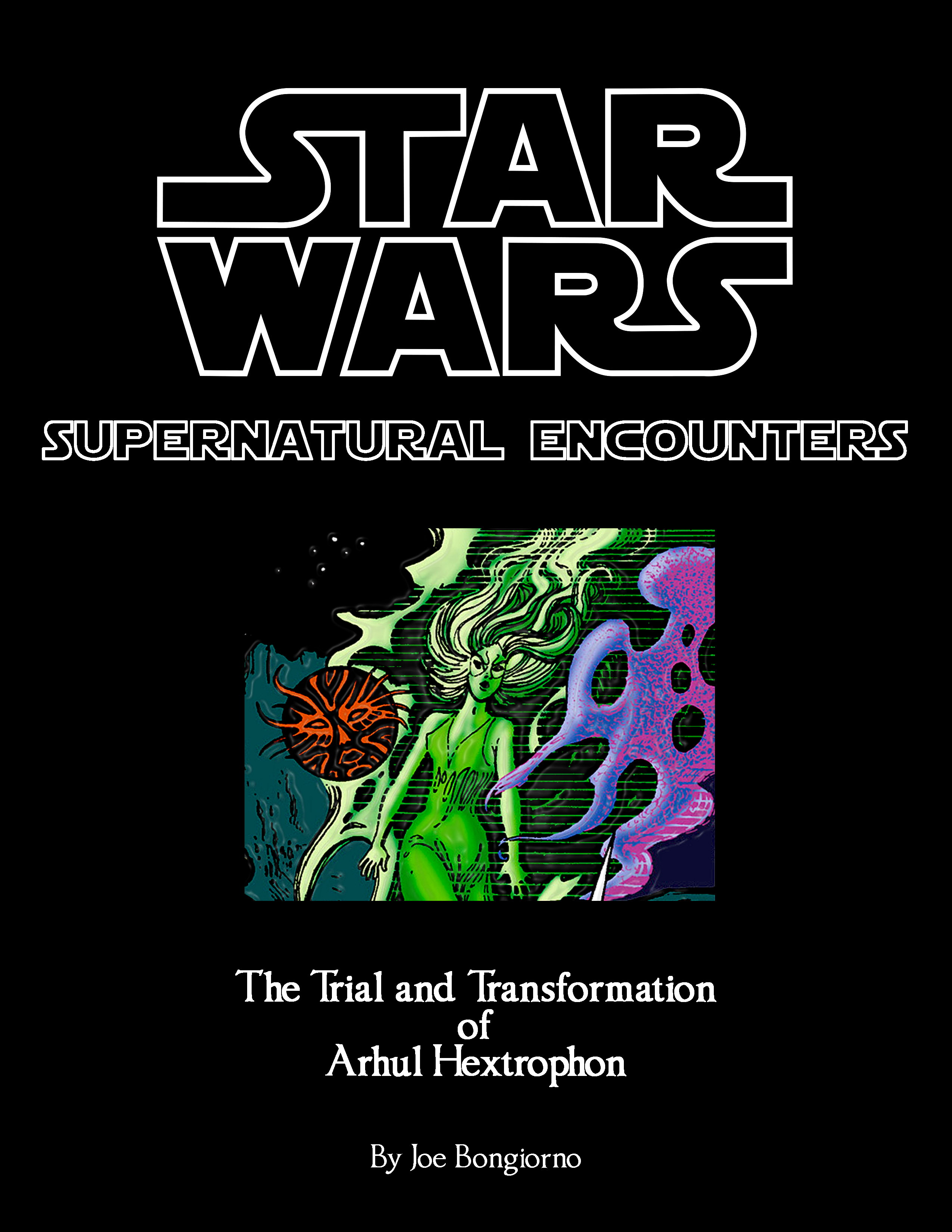
Continuity Cavalcade #2 - Supernatural Encounters in the Star Wars Universe


Joe Bongiorno has turned out one of the most continuity-heavy Star Wars Legends pieces yet! And you'd better believe that it turns everything you know about Star Wars upside-down.

You can get early access to the podcast on Patreon (www.patreon.com/AdamMudman) and like us on Facebook (www.facebook.com/MudmansAList) to get updates!


Image Source: www.starwarstimeline.net

Wednesday, March 6, 2019

Doctor Death (1989), by Webster Colcord


* And yes, this is the best screencap I could get of the title card with my tech limitations.

"For some, the end of the world was just the beginning." So opens Webster Colcord's 19-minute Super 8 post-apocalyptic epic, Doctor Death! Kinda the message for the times, huh? Well, it was the message of the '80s, too, when Mad Max clones were all the rage. We were two years away from the end of the Cold War when this film emerged, but that didn't mean the ostensible nuclear threat was over. Still, I doubt that Mr. Colcord was taking the idea of nuclear armageddon overly seriously. How could he, when he turned out pure goodness like this? For only a teenager could imagine and actualize such cinematic glory.

Dr. Death is our football-helmet-wearing, schoolbus-driving post-nuke marauder. Because it's the end of the world, there's nothing to do but toss Molotov cocktails and grenades at all visible passerby, and at any cows unfortunate enough to have survived the fury of mutually-assured destruction. The Deathmobile is destroyed by an agent of the Mutant Police--are those cops who police mutants, or are they cops who are mutants? The guy Death runs into while running from the officer is definitely a mutant. He looks a surprisingly-better version of some of the alien extras from Turkish Star Wars. TVs remind our hero of the world before the bomb, so he smashes them with a pickaxe. Then it's down to more murderin'--this time, he runs down a fellow whose friend calls in a mutant bounty hunter. The bounty hunter dresses like the killer from Nail Gun Massacre and has a rocket launcher in his wheelchair. During his fight with the bounty hunter, DD gets knocked onto a nuclear bomb, which has an oh-so-convenient activation button right on the top. We get see to Doctor Death's face melt off. This doesn't kill him, as melty-face Doctor Death shows up at the end with the magic of (really good) stop motion.

Super 8 was an astounding medium, because it enabled kids and adults the world over to make movies with real film, yo. Hell, it let them make home movies in general! There's just something nice about Super 8's grunginess, a permeating nostalgia that affects even those of us who didn't grow up with it. A generally silent medium, many Super 8 movies are either dubbed or have music and sound effects only. Doctor Death is no different, containing only grunts, screams, explosions, gunshots, and an endless supply of homemade '80s Casio themes. Ultimately, a film like this needs no dialogue; just some labels and text cards to let us know where we are. For people who like their cinema straightforward, I'm not sure you could streamline a movie more than this.

Themes? What themes? These are teenagers we're talking about! Kids Goofing Off is enough of a theme by itself. There's a certain innocence to the gruesome violence of teenagers. Perhaps they are the only ones we can excuse for capital-W Wallowing. In some ways, teenagers are expected to Wallow. But Wallowing can get you far, y'know? Webster Colcord now has a pretty solid-looking visual effects career, having worked on the X-Men films, Minority Report, and Stranger Things. We all start somewhere. And this is a great debut.

For something this small and cheap, the direction, editing, and effects are all very top-notch. Shots are framed intriguingly all the time. The transitions are made of explosions or chilled fade-ins. The mutants look like mutants, and the explosions are astonishingly rendered via damaged/blown-up film stock, as if the flames of the blast are enough to burn the medium it's shot on. This movie is dressed to impress, and you really should see it. If I haven't "sold" this movie enough to you, I want to let you know that Colcord gives a role credit to his puppy, "Misty the Wonder Dog," even though she does not appear outside of the end credits.

You can help support the A-List on Patreon! And you can like our Facebook page to get radical updates!

Friday, December 21, 2018

Top Ten A-List Films of 2018

2018 was a wild ride without these movies. How can I even describe what it was like with them?

A million thanks to all my listeners. You are the stars. <3

You can support the A-List on Patreon at www.patreon.com/AdamMudman and like us on Facebook at www.facebook.com/MudmansAList.

Wednesday, October 17, 2018

Thursday, August 30, 2018

Zombie Lake (1980), by Jean Rollin


Yes, even Jess Franco had his limits on cheapness. But when Franco steps out you call in Jean Rollin to bring you the zombie goods.

The show will be going on a brief hiatus as we get ready for the 200th review!

You can support the show on Patreon at www.patreon.com/AdamMudman, and like us on Facebook at www.facebook.com/MudmansAList.


Thursday, August 9, 2018

Forbidden Jungle (1950), by Robert Tansey


The worst jungle adventure movie of all time, and therefore the only one worth watching.

You can support the show on Patreon at www.patreon.com/AdamMudman, and like us on Facebook at www.facebook.com/MudmansAList.

Tuesday, August 7, 2018

Secrets of Chinatown (1935), by Fred C. Newmeyer


A pulp novel come to life, Secrets of Chinatown is simultaneously amusingly bizarre and depressingly racist.

You can support the show on Patreon at www.patreon.com/AdamMudman, and like us on Facebook at www.facebook.com/MudmansAList.

Thursday, May 17, 2018

Ilsa, Harem Keeper of the Oil Sheiks (1976), by Don Edmonds


1975 saw the release of what could easily be called the archetypical Nazisploitation film, Ilsa, She-Wolf of the SS. That film featured Dyanne Thorne as Ilsa, a Nazi commandant who tortures prisoners at a concentration camp, while also seeking a man who can give her an orgasm. Those who fail in this task--i.e. all of the male prisoners at the camp--are castrated. As you may well expect, She-Wolf is a miserably gruesome watch, with much of the torture that's shown looking pretty authentic, thanks to the filmmakers only showing what they could technically accomplish, and implying the rest. When making the follow-up, which brought Ilsa to 1970s Saudi Arabia, the filmmakers toned down much of the disturbing content in an effort to seek an audience that wasn't comprised entirely of weirdos and perverts. But they still had to appeal to, y'know, weirdos and perverts, because it was still a film about a big-breasted, often-nude Teutonic blonde torturing people in ways that were occasionally erotic. While many consider this mixture of interests to be a failure, I'm of the opinion that the producers of Ilsa, Harem Keeper of the Oil Sheiks managed to create an atmosphere of camp which both the original film and this film's followup, Ilsa, Tigress of Siberia, were sorely lacking. This is, generally speaking, a feel-good exploitation movie, where it's just one bit of nonsense happening after another. It grows on you after a while.

Ilsa is now the lieutenant of a powerful Middle Eastern crime lord, El Sharif. El Sharif deals both in human trafficking and in drugs, and he and Ilsa's activities have caused them to be investigated by an international commission led by Commander Adam Scott and a pudgy, wimpy German dude named Dr. Kaiser. The pair have a spy planted in El Sharif's palace but she is captured and tortured before they arrive. Despite knowing that the two are spies, Ilsa falls for Commander Scott when he turns out to be a regular sex machine. Eventually her relationship with him causes El Sharif to sentence her to molestation at the hands of a leprous beggar whom she had flogged at the start of the movie. This causes her to help out a group of rebels seeking to oust El Sharif and replace him with the legitimate ruler of this region, his nephew Prince Ali. In the end Ilsa is betrayed by Ali and thrown in his dungeons to await a hideous fate.

I had to piece together aspects of this plot over multiple viewings, because as far as director Edmonds is concerned, story is as secondary and incidental as a hillbilly's napkins at an all-you-can-eat barbecue buffet. No, we're here to see sleaze, and they are quite insistent on pouring on that sleaze whenever they can. Gore, dismemberment, torture, cannibalism, pedophilia, and rape are all key themes, though unlike She-Wolf none of it is brought "too far." For all that means. For example, they may talk about letting rats feast on someone's vaginal tissues, but they don't show it. We still get a girl whose breasts are crushed in a vice (which is actually a lot funnier than it sounds) and of course there are the women whose vaginas are outfitted with proximity mines. These mines are tested, by the way, by "the love machine"--a piston-driven mechanical arm that ends with an immaculate pewter dildo. (Might not want to use that too much, pewter can be real nasty on the skin I've heard.) Legit gross-out points to the scene where a girl's legs are eaten by ants--and then there's the guy who buys one of the girls, but says over a pair of pliers, "I don't like the scrape of teeth..."

Dr. Kaiser's arc in this movie is, um. Interesting. On the drive to El Sharif's palace he says, "I hope they do not give me...a sheep's eye. I have been all over the Arab world and it is a common gift to give to foreign guests. But they are disgusting, and I do not know if I could eat another one." Then of course El Sharif feeds him "the eye of [his] most beautiful sheep"--Kaiser's spy. Later, El Sharif sends an underage male prostitute to Kaiser's room, and despite initial resistance, there is every indication that he ended up taking him up on his offer! It's equal parts horrifying and comical, because despite its implications, it's so blatantly glanced over that it feels like a background gag! I have no idea what to make of this. I think it's best I move on. It is noteworthy that the same actor played a Nazi General in She-Wolf of the SS who commanded Ilsa to give him a golden shower. So he's always been a class act.

I don't really even know if I can call this film racist, because while it seems to assert that Arabs are vicious and have a propensity for human trafficking, it's not really something that's specifically dwelled on besides the provision of the setting. There are local people fighting El Sharif for presumably noble purposes, and it's not like the white Europeans are much better, with Dr. Kaiser being a pedophile, Commander Scott leaving Ilsa to die after sleeping with her, and Ilsa being, well...Ilsa. The sleaze is universal, and frankly, after watching movies like The Sheik and The Barbarian, this movie is pretty fair in its treatment of Arab folk. Though that's not saying much.

If you want uncut sleaze as only the '70s can deliver it, this is the film to watch. It's the one Ilsa movie I've bothered to go back to, and despite the change in tone, it is the most watchable of all of them in terms of content and lack of boredom. There's always something happening--whether you like it or not.

If you want to see more reviews like this, plus get access to bonus goodies (like mini-reviews of every movie I watch), you can support the site on Patreon. And don't forget to like the A-List on Facebook to get updates!

Thursday, May 3, 2018

Samurai Cop (1991), by Amir Shervan


Samurai Cop starts off pretty normal. Two cops, Joe and Frank, are going after some cocaine smugglers, aided by Peggy, their eye in the sky. Everything is straightforward and by the book. And then the car chase begins.

It's a familiar thing, in a way, though I can cite no other movies off the top of my head that do it. There are actions films just like this that have a few scenes right near the start that mimic "real" movies almost perfectly. Perhaps this is the footage they shot first, and showed to investors, to trick them into thinking they were getting anything other than Samurai Cop. And then, once they had their budget secured and squared away, they filmed that car chase scene. And Amir Shervan's apparent desire to be the world's biggest ten year old began.

Joe is a samurai as well as a cop, and with Frank he chases these coke dealers through the requisite City of Boxes, all of which are smashed. Yes, it's one of those car chases. At this point in cinematic history, it's not a true car chase if there aren't some conspicuously-placed boxes (fruits and veggies optional) for everyone to smash into. Anyway, once they arrest/slaughter the coke dealers, Joe and Frank start going after the Katana Gang, controlled by the mulleted Mr. Fujiyama. Aiding Fujiyama in his drug empire are martial arts master Okamura (a creatively named character played by Gerald Okamura) and evil samurai Yamashita. Yamashita must be a codename of some kind, because he's played by Robert Z'Dar, who, for those of you unfamiliar with his work, is as white as a sheet of printer paper. He turns in a legitimately great performance here, which easily rises over what most of his colleagues turned in. Fujiyama commands him to kill one of the hospitalized victims of Joe and Frank's coke bust: "I want his head! And I want it right here, on this piano!" "I will take his head, and I will place it on your piano," Yamashita replies.

Joe ends up getting involved with Jennifer, whose family owns a restaurant that Fujiyama helped raise out of debt. This angers Fujiyama, who wanted Jennifer all for himself. The war between the Katanas and the Samurai Cop heats up until Fujiyama is torturing Joe's friends--threatening to castrate Frank, burning Peggy with hot grease, and killing a cop he worked with on raids, along with his wife. But this is an action movie, so you better believe all the bad guys end up dead, one way or another.

There is so much that is just done wrong in this movie. The sex scenes are astonishingly bad, even by the usual "sex through the undies" standards. We get many scenes of men in Speedos with full cock outlines visible, and none of it is welcome, especially if it comes from Joe. Joe is perfect, though. His beyond-shoulders hair and ludicrously intense face make him seem like the opposite of someone who should be a cop. The fact that he runs around shooting wantonly and chopping people's limbs off doesn't help matters. This is yet another movie where laws are more like guidelines, along which those in authority may impose their own moral beliefs rather than following those that might be "popular" or "ethically acceptable." I think there are a few moments though where it questions its own stance on police brutality (which is that it's okay as long as the people you're dismembering are bona fide evil). There's an amazing bit were Joe is making full of Chief for "not wanting no more dead bodies," plus a later bit where he says, "If it's Okamura [at this house] we'll arrest him; if it's the wrong house we'll apologize the owner, standard police procedure." They don't go in guns blazing for this scene but it's easy to imagine them doing so. In this universe, unarmed civilians are shunted to a pocket dimension for safekeeping when fights break out, unless they're romantically involved with the main characters--then they can be used as hostages.

This movie does some other stuff wrong besides saying that police brutality is an okay thing to do. It's kind of hella racist? Joe messes up the Japanese characters' names on purpose (calling them "Omaha" and "Yamaha"), brings up their ethnicity for no reason, and calls Jennifer, the white girl in Fujiyama's company, "all-American." There's also an oddly-inserted gay waiter character from Costa Rica whose "comically" long name is brought up for no other reason than to drag Hispanic people. Finally, there's the bizarre incident where, when Frank (a black man) is threatened with castration, his dick is called "a gift--a black gift." I don't even know what to make of that. This movie is fucking weird.

Finally, there's a wonderful cascade of trash besides all this. When sneaking into the hospital to put that guy's head on Fujiyama's piano, Robert D'Zar disguises himself as a doctor--for no reason. This never comes up in any way. While he and his assistant are escaping the hospital, they're confronted by two security people who have the same dub actor. When someone asks Joe what katana means, he translates it as "Japanese sword," which is, um, not exactly correct. Fujiyama sends guys to break Joe's legs twice, because the screenwriter keeps forgetting scenes that have already happened. Then, when we see Robert D'Zar having sex, we have the opposite problem of the sex scene from The Room--here, the woman in question seems to think that Robert Z'Dar's dick is in his belly button! (You fool, everyone knows Robert Z'Dar's dick is in his chin.) Oh, and I can't consider this review complete without quoting this scene--an exchange between Joe and a random nurse.

Nurse: "Do you like what you see?"

Joe: "I love what I see."

"Do you want to touch what you see?"

"Yes. Yes I would."

"Would you like to go out with me?"

"Yes. Yes I would."

"Would you like to fuck me?"

"Bingo."

"Then let's see what you got." *Gropes his pants* "Doesn't interest me. Nothing there."

"Nothing there? What would interest you? Something the size of a jumbo jet?"

"Have you been circumcized? Because the doctor must have cut a big portion of it off."

Both of them deliver these lines like they're kids doing bad impressions of Robby the Robot.

I think that's a good place to end this review.

If you liked this review and would like to see more like it, you can support the site on Patreon! Also, you can like the A-List on Facebook to get updates!

Tuesday, February 13, 2018

Ace of Aces (1933), by J. Walter Ruben


By coincidence, this film was the next entry on my to-watch list following The Man from Colorado, a 1948 Western about a former Union officer driven mad by the Civil War. While those movies contrast wildly as far as budget and artistry are concerned, the two films are similar in many ways. Both of them are about good men who War makes into monsters; consequently both films deal thematically with the dark side of humanity that lurks inside everyone, the side that causes Wars to begin with. As such they can both be interpreted as anti-war films, but Ace of Aces is much more directly about protesting conflict. That directness certainly makes it a bit dumber than The Man from Colorado, but that doesn't mean the film's wiping its drool off the floor. What makes Ace of Aces so enjoyable and indeed compelling is its emotional intensity and earnestness about its message.

Rocky Thorne is a sculptor engaged to Nancy, a fellow intellectual. They share rambling, pretentious conversations with each other but generally seem to be good kids. Then America enters World War I, and there's a need for fighter pilots. Nancy turns on Rocky when he dismisses the value of the War, and that's enough to make him enlist. Despite his early hesitance, Rocky faces his duty with honor, and a terrible change begins to occur. It turns out Rocky really likes killing...and he's willing to sacrifice whatever parts of himself don't apply to that. What's more, he becomes secluded, refusing to let anyone else service his plane or guns. Not even Nancy can turn him back, even though her own job as a nurse has taught her how foolish it was to support this war. Is it too late for Rocky, or can some new horror yet reach and change his heart?

Many of the old cliches are rolled out for this one. Before his enlistment, Rocky compares the marching troops outside his soldier to lemmings--at great length. At such great length, in fact, that I couldn't help but envision an enormous red alarm flashing over the whole screen, shouting "SYMBOLISM" the whole time. Adding to the SYMBOLISM is the fact that Rocky's unit is singing a song to the tune of a funeral march when he enters the bunk. It's moments like this which couple with the occasionally over-flowery dialogue to make the whole thing seem heavy-handed. But I think this hamfistedness comes from a place of caring.

There are a plenty of strange details about this film which make it a joy to watch from the perspective of one who like eccentric movies, while also showing, as those eccentricities often do, a precision and care that went into this movie's forging. When Rocky is meeting his squadron for the first time, each of them have a witty or "witty" introduction/sobriquet. The best being "Tombstone Terry the Tennessee Terror, aka Dracula." I could read 80 years of comics centered on a WWI ace with that name. There's also the fact that each of the pilots has an animal mascot--a dog, a parrot, a monkey, a goat, and Rocky's own lion cub. These animals aren't just for cheap gags--they, too, bring symbolism, because they start fighting around the time that Rocky's violent obsessions start ripping the unit apart.

The film's heart serves it well, as those trips into eccentricity also lead to genuine darkness. Witness Rocky whipping a man with an ammo belt after he failed to load it properly, sending gouts of blood gushing from his crushed skull. Witness Rocky turning Nancy's pro-war arguments on her to convince her to have drunken, sweaty beer sex with him (which is truly skin-crawling by the way). And finally witness Rocky turning straight again after being forced to spend the night with a German teenager he shot down, whom he eventually helps commit suicide when it becomes clear he's got nothing but a slow death ahead of him. War. Is. Hell. It's tough to watch the early scenes where Nancy is trying to justify to Rocky what seems to him to be coldhearted murder, and remember that that was the common attitude of the day. Of course Rocky's arguments, that war is pointless and without true glory in the end, make sense, but when this War broke out people put so much of their pride and fear into their nationalism that relationships really were destroyed over "dishonor," for whatever meaning honor has when you're up against lung-dissolving gas.

Here the movie shines the brightest, because it's ultimately a film concerned with how war happens. The answer I feel it gives to this question is "peer pressure." Rocky is a gentle man largely ruled by his love for Nancy, but Nancy is able to use that to lever him into doing something he's afraid of, by forcing him to face what seems an even greater fear. Once this layer kicks in and pushes him out to the barracks, the encouragement becomes positive: he's rewarded by the comradery and praise of his fellow pilots, who all treat each other like brothers. It's notable that even when his squadron turns on him for his change in behavior, it's not enough to turn him back to good--but he does change his behavior when they turn on him once more after he announces he's leaving to take on a prosperous teaching job instead. In this case, this later scene, where Rocky loses all his friends in the squad for accepting his CO's offer, shows that the positive reinforcement of the squad's brotherhood was really enforced by implicit violence this whole time. The friendship of the armed forces, the film seems to say, only goes as far as one friend is useful to another. That's pretty cold, given that in my experience the military does create sincere friendships as well, but these pilots stand in for the war they fight and the horror it in turn represented, and how entirely without honor and compassion that conflict was. I know this probably makes me seem dumb, but it was really nice to see a movie that flat-out condemned World War I with such vitriol, especially one made in such a precarious era as the inter-war period. All wars are fucking horrible, but that so many of us still rank World War I as one of the top worst points in all of human history shows that it in particular was especially fucking horrible. It deserves to be condemned in big bold letters.

This film was something of a marvel for me; an airplane thriller with some serious war drama. And trauma. Watch it as I did, with The Man from Colorado, or maybe with another airplane thriller, and you've got a good day carved out for yourself.

If you liked this review and would like to see more like it, please consider sponsoring the site on Patreon! Also, don't forget to like the A-List on Facebook to get updates!

Thursday, February 8, 2018

Confessions of an Opium Eater (1962), by Albert Zugsmith


Just as Fanny Hill was an adaptation of a classic book that echoed and cashed in on the Sexual Revolution, this movie's timing was similarly perfect--and it's probably no coincidence that today's movie's director produced Fanny Hill. While this "adaptation" of Thomas de Quincey's Confessions of an Opium-Eater preceded much of the heavy drug use that was to come in the West, it doubtlessly had an influence on such as well. If it was possible to screen reels of this you'd better believe hippies were doing that in their basements when they had a chance--hell, it has Vincent Price in it, and hippies loved them some Vincent Price. (Who doesn't?) Promising trippy visuals clipped onto the action scenes that would define the Bond films yet to come, Confessions of an Opium Eater can be viewed as a prototype for many of the trends of the nascent decade it inhabited, a creepy drug-echo of times yet to come mirroring Price's character's own time-warping experiences in the story.

Price plays Gilbert de Quincey, a thug-for-hire and descendant of Thomas de Quincey. Gilbert finds himself caught up in the San Francisco Tong Wars of 1902, specifically a showdown between anti-human trafficking editor George Wah and the ancient, never-seen slaver of women Ling Tang. Ling Tang, through his officer Ruby Lo, hires Gilbert to bring back a prize slave girl who originally wanted to come to America to marry George Wah. Gilbert decides to rescue the girl from Ling Tang, bringing the full force of the Tong down on him. At some point in the chase, in order to hide out, Gilbert must smoke opium. Much of the film's reality has been dubious so far--but now Gilbert can't trust his senses, and consequently, neither can we.

This film is well-made, but it's not really until the end that everything "clicked" for me. It's lit by plenty of fun moments but only when viewed holistically does it become truly wonderful. Let's focus on the little details first. First of all Angelo Rossito shows up and he and Vincent Price are onscreen together, though they share no lines. Rossito is probably foreshadowing for another little person who shows up, the unnamed Chinese little person who helps Price in his quest, and whose death possibly foreshadows Price's own. Then, there's something I caught at the beginning, where one of the slave-girls aboard the ship tries to appeal to the ship's captain, who silently rolls his eyes and gestures her away. To me that hinted at something bigger. Was there a relationship between this girl and the captain, an attempt by the former to save her life? Is this all that tryst led to? I don't know if that was intentional but in the heat of the moment I read it that way, and it was heartbreaking.

Even as early as these opening sequences on the slave-ships, there are psychedelic hints which help suggest that Gilbert's trip travels back from the future to touch on all of his experiences. When the captured women are transported from ship to ship, their bodies falling to the deck are rendered in claymation, which looks out of place in the rest of the shots. Similarly, when one of the slave-ships is destroyed the explosion is a cartoon. This ends up leading into a scene where Gilbert, ostensibly sober at this point, hallucinates that a dragon-kite is a real dragon. Add in some weird geography/architecture (why does George Wah's office have an elevator into the sewers?) and you've got a world which is weird to start with. One which probably doesn't need opium's touch.

The actual psychedelics of the film are rather disappointing, but this was in an age where filmmakers rarely ever had even secondhand experiences with these substances. We get plenty of distorted shots of faces, skulls, and Chinese masks, however, which make up for things. There's also a spooky sequence where everything is silent and in slow-mo--a more realistic psychedelic terror. Zugsmith understands at least in some capacity that psychedelia and the horror therein thrives on altered sensation and a feeling of dissociation from time and other aspects of reality we take for granted--this slow-mo sequence captures that feeling nicely.

Then there's the dialogue. The runtime is populated with stretches of Price (supposedly) quoting de Quincey, Confucius, or the Bible...I couldn't be bothered to check all the quotes. But in between this pretentious quoting, Price also gets lines like, "I'm not a side'a beef in a butcher shop" which help bring you back to reality. Similarly, the aforementioned Chinese little person is a delight, as she often finds herself married to husbands she doesn't like--but only because they bore her. She often runs away or dissolves the marriage herself just so she can move onto a new experience. She actually probably has the best-defined character in the movie.

Despite the pretension of the dialogue, the ending does feel emotionally resonant--the movie does feel like the end of a journey, like a trip winding down. At the last, Gilbert has embraced the distorted reality opium has given him, and I will say that there is no more appropriate Vincent Price ending than this. As he is carried to his presumed death by the grungy waters of a dank sewer, he asks the audience: "Were these the whitening waters of death...or the gates of Paradise?" You gotta wonder, but the visuals don't let you wonder far...

Confessions of an Opium Eater is probably a love-it or hate-it, or rather a like-it or meh-it. It never dares too much, but it is pretty great for what it sets out to do. I felt like Vincent Price was slumming it a bit with these Zugsmithian conditions, but Price is never wasted--with him, you're in good hands.

You can help make reviews like this possible by sponsoring the site on Patreon! You can also like the A-List on Facebook to get updates!

Wednesday, November 29, 2017

The Primal Essence: The Mudman's Top Ten New Views of 2017

2017 saw a lot of growth for the A-List! I found a comfortable schedule wherein I could squeeze in three reviews a week, and I intend to hang onto that schedule for as long as I can. I opened a Patreon, which has been an exciting experience so far. I posted a bad movie sci-fi novella. I was able to find nine weird books to talk about--not as many as I'd hoped, but that's what next year is for. It was a marvelous time and I can't tell you how glad I was to have this site to go back to whenever the real world came down too hard on me. The fact that so many of you kept showing up week after week made it all the better. I may curate its entries, but it's really you guys who build my A-List...you're all on my A-List of People. You are the finest souls I know.

The movies on this list are the cream of the crop. They tore my heart from my chest and shook up my soul. I hope you track them down if you haven't already because they will reshape your life for the better. Well, actually, it's for the worse. But in a good way. Capiche?

FROM BEST TO BESTEST:


#10 - I AM HERE...NOW, by Neil Breen

It is only out of a stubborn respect for the later entries of this list that Mr. Breen ended up at the number ten spot...otherwise this one would be much higher. I Am Here...Now was the best possible introduction to Breen I could(n't)'ve hoped for. I've seen some pretty bizarre Ancient Alien stories over the years, but this one takes the cake--Breen is a sign that Weird Film is far from dead, even as the Intentional Bad Movies try to take their cut from the legacy spawned by the people whom Breen now succeeds. May self-awareness never touch you, Neil, ol' buddy. I'm so glad I have the rest of your filmography to discover.


#9 - THE PHANTOM COWBOY, by Robert J. Horner / SMOKING GUNS, by Alan James

A dirty stinkin' tie! I knew I had to have one B-Western on here and no matter how much boiling down I did I couldn't pick one of these over the other. Smoking Guns is definitely the "better" movie, but the sheer shittiness of The Phantom Cowboy makes it feel truly alien. I'm starting to doubt I'll find Westerns weirder than these two, but if these are the best there are I'm in good company. I've definitely raised a lot of eyebrows in my time talking about the movies I watch with the people I know in Real Life. They've never been raised higher than when I tried to describe these two.


#8 - DRUMS O' VOODOO, by Arthur Hoerl

'Cause the drums make me happy...drums make me happy...my feelings on the so-called "race pictures" have shifted somewhat since I wrote this review due to some things I've learned about them (i.e. creative control was not in the hands of the actual black performers as much as I thought), but there's no taking away the talent from Drums O' Voodoo's cast. Aunt Hagar is still one of my favorite movie characters of all time, and to my dying day I won't forget the time she fucking sassed off Jesus. At this point, I feel I've seen every voodoo movies there is, but there's something deeply special about this one. I'm (ideally) getting a new copy soon, which may be from a different print...I may have to write something up if it turns out the lost footage is in this version.


#7 - JUNGLE TRAP, by James Bryan

I don't like getting hyped for movies because it's so easy for those sorts of hopes to get dashed. But not when James Bryan and Renee Harmon are at the helm. My heart nearly exploded when I learned this was a thing and it was a tough sweat waiting for it to come out. But it was worth it. Farewell to a pair of great careers...you guys made my life, one last time. Oh, how I wish you still had one left in you.


#6 - SWEET TRASH, by John Hayes

Now we're slipping into the New Weird. For me, that is. I spent so much of my life thinking I'd seen all the greats, but then this year came along and I started to see some trippy fucking shit. Sweet Trash is apparently not overly beloved even among trashsters, which is saddening. This movie dips into territory both grim and hilarious, often without warning, in the best of ways. As far as boggy-surreal nightmares go, this one just barely beat out Disconnected and Euridice BA 2037, which would make a great triple feature with this.


#5 - NIGHTMARE ALLEY, by Edmund Goulding

Gotta have at least one legitimately good movie on here. I guess this Ty Power guy is hot stuff, huh? Well, even if I had known that at the time, I would've been swept off my feet by this movie. A clammy, greasy, disconcerting expose of circus life, this one fits in perfectly with some of my other favorites from this year like The Unknown and The Amazing Mr. X, but this one is the best of all of them. I've been watching a lot of Hollywood dramas from the '40s now in the wake of sitting down for this three times in a row. I hope they won't make me sick.


#4 - BLOODY WEDNESDAY, by Mark G. Gilhuis

When I was writing the list I kept putting this on here for some reason. I'd take it off, asking myself, "Wha...really?" Then I would rewatch it and remember everything. For a while I would just quote that goddamn teddy bear, voice and everything, and sometimes people would hear me and worry about my health. Simultaneously the most depressing and hilarious movie about mental illness I've seen, Bloody Wednesday is so unsure of what the heck it's supposed to be that it becomes a psychedelic trance. I've found for myself a new classic of the slasher (?) genre, which isn't an easy feat these days.


#3 - INFRASEXUM, by Carlos Tobalina

Yes, I like this one more than Flesh and Bullets, because I'm a sucker. It's almost unbelievable to me that this was Tobalina's debut. This is a ballsy film to make under any circumstances, and yet porn is a weird thing, and thus he built a whole career out of this. I wasn't expecting to get a Pseudo-Philosophical Voiceover-Journal Inner-Quest Movie that also had a disembowelment scene, but at this point, I should know better. Art and trash go well together and this is a great example of how they pulled that off in the late '60s.


#2 - GRETTA, by John Carr

No explanation. It's not even based off the book--it just exists. It's like 35 movies got stuck in a blender and the director drank the result, and the camera implanted in his brain recorded everything he saw afterward. Or, alternatively, it was originally an 8-hour mega-epic like von Stroheim's Greed and they cut out too many reels. Why should we care about this occasionally-creepy romance when there are killer beetles...and vice versa? Better yet, it has a "sequel." If you count movies that recut other movies to make them even more confusing as "sequels," that is.


#1 - THE TELEPHONE BOOK, by Nelson Lyon

The best. The Holy Grail. This is why I got into reviewing movies. I laughed, I screamed. I could go on forever but The Telephone Book is really good, okay? Every new scene brought fresh surprises that I could never have expected--which is really what cinematic media is meant to be about. For a movie about sex, it felt like sex...it kept building, and building, and building, and then there was that ending and there was such joy. A vulgar, mind-boggling cartoon brought to life, I'll never see anything like it again; but then, I was lucky enough to see it in the first place. 

AND THE BOOK OF THE YEAR IS... *DRUMROLL PLEASE*
...
...
...


THE UNHOLY THREE, by Tod Robbins

Man, I sure read a lot of bullshit this year. How could the Book of the Year be anything but this when the competition was Space Jason and voodoo sharks? The Unholy Three is a weirdly kinetic pulp pseudo-masterpiece, whose presence on this list means I can live with myself for not including The Unknown. Lon Chaney is a powerful figure even when he's not directly involved; and besides all that Tod Robbins is an accomplished enough writer to keep me hooked. Next year I'm gonna grab a copy of Robbins' "Spurs" to take a look back at the origin of Freaks, and this book will get a mention, as I've said, when I get to touching on Todd Browning's The Devil-Doll. Robbins also wrote a book called Mysterious Mr. Martin, which looks like a delight. More to follow!

So that's 2017! See you next year! I loved all the time we spend together and I can't wait to start again soon. In the meantime, you can check out the $1 tier on my Patreon to hear some of my Movie Thoughts. Otherwise...keeping dreaming, true believers!

Friday, September 29, 2017

Rats: Night of Terror (1984), by Bruno Mattei


Synthesizers and badly-dubbed dialogue are the waters which take us to the world of 225 AB; AB being "After the Bomb." This is a world of Bruno Mattei's making--it's remarkable what he and Claudio Fragasso thought the future would be like. A dark and shabby place, inhabited largely by danger and idiocy. It's no wonder that after-the-end movies were so big in the '80s, but Mattei's unique (or "unique") vision of what humanity and rat-anity would become stands out to me among a vast tan-gray sea of repetitive Mad Max cash-ins. Mark my words, I'm sure there are some "nods" to Mad Max in Rats: Night of Terror that I'm missing, but this is Mattei through-and-through, for better or worse.

Rats doesn't really follow a specific "plot," per se--we mostly just follow a group of dozen-odd "New Primitives" as they attempt to fit in with the surface world after mankind has spent two centuries living underground. (In a reference that doesn't bode well, Mattei mentions that the nuclear holocaust happens in 2015. I'm abstaining from any "two years overdue" jokes.) They all wear outfits that Doctor Who would wear if he regenerated twelve times in the '80s--hell, there's even a girl who dresses like a fucking vampire! They slowly uncover many gruesome secrets about their world, such as the fact that the previous settlers of the surface were all killed by the legions of rats that now rule the ruined former metropolises. And slowly, one by one, the same fate befalls them. Either they damn themselves with their own idiocy by mocking the rats or the rats do weirdly intelligent things like eat through their motorcycle tires. In the end, only a small group of survivors makes it out to witness the ending, which...oh, I'll talk about that.

But to start with, let's just dig into something that nagged at my mind upon rewatching this: what genre is this? I've deliberately tried to avoid horror films in these last few weeks leading up to Spookyween, but it seems I've written myself into a bit of a pickle, as Rats: Night of Terror definitely looks to be a horror film. Post-apocalyptic horror is a natural genre; I mean, swap out the rats for zombies and you've got yerself something mainstream. (And guess what, this movie steals settings and scenarios from Night of the Living Dead.) There are plenty of horror music cues and rotten, half-eaten corpses to go around, plus that delicious ending, but in the end there's a lot of emphasis on the action of fighting off the rats, and also, on the comedy. As we've seen, Claudio Fragasso had a distinct obsession with writing absurd dialogue, up to and through the time that he made Troll 2. And Bruno just kept giving him more leash. I mean, they must have been making some money together, even if it never showed up onscreen. And as such, Rats is a conversational nightmare, fraught with bad lines delivered so poorly it's hard to imagine there wasn't some desire to raise laughs.

Really, how do you explain the scene where the black girl--sigh; her name is Chocolate--gets flour dumped all over her. She starts jumping around, excitedly exclaiming, "I'm white! I'm whiter than all of you!" Then, one of the New Primitives comes across a bunch of rats falling into their water purifier. "Mangy beasts," he says. "That's how our waters get...pahlluted!" Have I talked about this before? Even if I have, it bears repeating. I'm sure I've never mentioned the line, "Computers and corpses are a bad mixture." There are also Ax 'Em-esque sequences of large crowds screaming that go on for such a long time that I can't believe they aren't played for laughs. Then, finally, there's the scene where the leader, Kurt, puts one of the rat victims out of his misery with a flamethrower. I'm pretty sure that there are much more humane ways of killing someone whose flesh has been bitten off than roasting them alive. Incompletely roasting them alive, I should add, as this poor soul lives for several more minutes after being set on fire! I know there's such a thing as the Idiot Ball, but this is fucking ridiculous.

Did Bruno and Claudio read Jack Kirby's Forever People comics or something? There's something about a gang of motorcycle-mounted youngsters having over-ecstatic adventures laden with hilariously unrealistic dialogue that really strikes a familiar chord with me. Of course, these kids don't have superpowers, unless you count Video, who has the power to restore power to computers by pressing random switches.

Yes, I did say "Video." It's astonishing, but I can almost remember all the main characters' names. There's Kurt, the leader, with his scarf and leather jacket; his girlfriend, Diana; Duke, who wants to overthrow Kurt as head of the Primitives; Video, who is a tech wiz; Chocolate, the black girl and heroine of the film; Lilith, the vampire lady; Lucifer, her boyfriend; and there's the bald guy with the third-eye tattoo (a descendant of the girl from Infrasexum, no doubt), and there's also the kind of nerdy guy who gets killed by the water-purifier rats. I should know Bald Guy's name because he almost makes it to the end. But alas, I guess this just means I'll have to watch it again.

So I guess this is also a Power of Friendship movie on top of everything else. Except Friendship doesn't really prevail in the end, does it? Because Chocolate and Video are finally found by masked survivors who are seemingly a group of saviors coming to help them; they poison the rats and save them from the poison in turn. But then it turns out they are Rat People. Huh. Throughout most of the movie, the characters give a strangely human quality to the rats, which may be a remnant of this perhaps having once been a zombie script--maybe Bruno realized that humanization, and decided to make the full jump? In any case, this ending is weird and painfully open. Are the rat-human hybrids friendly? Did they record some of the messages that the Primitives heard earlier in the abandoned buildings? If they can speak English, why do they refuse to communicate with the survivors? Are they mutated rats who have taken on a human-like shape, or are they humans who have adapted by becoming rat-like? Fucking Christ! Why did this movie get no sequel?

Sequel or no sequel though, I don't think I've yet seen a post-apocalyptic movie better than this one. This is quintessential Eurotrash, quintessential Bruno, and quintessential after-the-endsploitation. What have you got to lose?

If you want to see more of these reviews, you can help me buy movies by supporting the site on Patreon! And don't forget to check out the A-List on Facebook to get updates.

Friday, September 22, 2017

The Black Alley Cats (1973), by Henning Schellerup


A group of schoolgirls are going through the city at night. A group of doughy, presumably drunk douchebags are sitting outside a bar. When the girls pass, they chase them down, corner them in a warehouse, and gangrape them. As the girls dress themselves in the wake of this horrific act, displaying about as much concern in doing so as they did when they were being assaulted (i.e. surprisingly little), they swear an oath to fight back against rapists everywhere. After some training in the arts of kung fu and guns, they go out on the streets to kick people in the dick and/or tear their genitals off. Thus our series of random events begins. They get revenge on their rapists, and break up a group of white guys conspiring to keep minorities out of their neighborhoods. Then, they recruit a sixth member in the form of a new student at their school by seeing how well she fights when someone is trying to pull her panties off in the shower. We find out that the dean of the school, plus the couple one of the Alley Cats babysits for, are all rapists, and they'll get the babysitting girl thrown out of school if she exposes them. But all's well that ends well, as the Cats eventually go after the rapist couple and administer to them a fatal dose of aphrodisiacs. How does one die from aphrodisiacs, exactly? Well...how do you think?

The Black Alley Cats is simultaneously alarming, hilarious, tasteless, and progressive. It is a movie which has beguiled me for years now due to the fact I keep watching it, even though it deals with something I actually have a hard time processing. I have to be real careful not to set off my PTSD when it comes to movie with sexual assault in them, but this was one of the movies I stumbled across before I picked up my trigger, so I know what to expect well enough to keep myself safe. The opening rape scene is distressing, but at the same time, the dudes keep their pants on, and the actresses, while generally good throughout the movie, are pretty wooden when it comes to delivering the concept of traumatizing horror. The stuff later in the movie, involving the couple Pam works for, is decidedly grosser, but the ending to everything helps redeem it. Nothing helps a movie like watching two people uncontrollably fuck while two cops try to make them stop.

It's sort of like a weird R-rated cartoon, really, in terms of both situation and consequence. This is another rape-revenge movie I've seen where no one ends up pregnant or with an STD--which, thank God, because there wouldn't be a chance in hell of that movie being entertaining afterward (least to me). What's more, however, there is relatively little notation of trauma, per se, at least as far as the girls who aren't Pam go. She ends up a little more beaten up because she is attacked several times, but at the end of it all, the girls really tend to laugh a lot of stuff off. At least the movie never frames it in a way that shows they're overly upset--it glorifies things like making a bunch of ladies molest a dude for being at a sleazy business meeting. Another take, I suppose, could show the girls' turn towards vigilantism as a symptom of their troubled minds, but I'm glad we got--as much as we could, at least--an optimistic rape-revenge film. It's a film where if you're assaulted, as too many people are, you can channel that rage and fear and pain and sorrow into improving the world, and yes, taking revenge on your attackers, without getting in trouble. Of course, it's also rather suspect that the police were apparently missing from existence both during and after the rapes at the film's inception, but no screenplay is perfect.

I haven't done a really good job of describing the strangeness of this film, but it involves things like: 1) the fact that the thing with the rapist lesbian headmistress is never resolved; 2) the girls call one of their victims "pink toes"; 3) I wasn't kidding about genital-ripping. At one point in their training montage, their instructor teaches them how to "rip the groin away." It's marvelous.

And yet, accurate. I never took self-defense courses in college but I knew other ladies who did. From them I learned that yes, a lot of self-defense programs for women do involve how to properly and safely injure the tender balls of the male rapist. It makes sense. A lot of people say that if you attack someone's crotch when they're trying to kill/molest you, they'll just get madder and treat you worse, but I can't imagine a man alive who would want to rape or even chase someone after even just one blow to the crotch, especially if that blow is meant to cause some hospital-level damage. I've known people, too, who condemn this level of violence, but again, I apparently have to remind people of when they are defending one of the most atrocious crimes a person can commit. If a rapist gets their balls torn off, or, hell, gets a stiff punch to the ovaries, in the course of trying to rape someone, I don't have pity for them. That's how serious this is.

The Black Alley Cats, however, raises important questions without being overly serious. That sense of frivolity in the face of its subject matter, plus its strangeness and weird cheapo charms, make it worth your while, if this is something you feel you could watch. It's a rough sit, and yet it always seem to hit its final reel before I'm ready for the madness to end. Odd.

If you liked this review and would like to see more like it, please sponsor the site on Patreon. Also, you can like the A-List on Facebook to get updates.