Showing posts with label vigilantes. Show all posts
Wednesday, February 6, 2019
The Devil-Doll (1936), by Tod Browning
And we're back!
We are switching back to written reviews for 2019, but rest assured there will still be plenty of podcast action at the A-List with a new show, Continuity Cavalcade, where we'll be examining oddities of canon and continuity across a lot of different shows and movies. You'll get to listen to that later this month. For now, however, let's get back on familiarly loopy ground with a return to the world of Tod Browning.
Paul Levond (Lionel Barrymore) is a convict who has been running from prison for weeks in the company of his cellmate Marcel. (Before we go any further, yes, Lionel Barrymore is playing a Frenchman, and no, he does not attempt any sort of accent besides his own.) Levond has been sitting in stir for 17 years now after his cheating bank partners embezzled their institution and framed him for it. While Marcel notes that Levond's heart is full of hate, he insists that he has something worthy to contribute to mankind. The two limp through the feverish swamps to his hidden laboratory, maintained by his disabled wife Malita, who sports a skunk-stripe in her hair and happens to be a mistress of goofy mad-science faces. It turns out she and Marcel had been working on a strange experiment that involves shrinking people's atoms so they become doll-like. Smaller people require less food, and so why not shrink people until there's enough to go around? Certainly beats snapping your fingers to kill half the universe. What's interesting is that the shrinkage's effect on the brain causes them to become even more doll-like, in that they can't move. Can't move, that is, until they are animated by an outside will. Yep--Marcel and his wife have created shrunken telepathy-controlled zombies. That's a pretty convenient thing to have control over when your cellmate dies, and your primary goal in life involves covertly assassinating the jackals who screwed you over. What I'm saying is that Levond and Malita are moving to Paris, where the latter will continue her experiments for the benefit of the former, while giving him a secret weapon to use against the three crooked bankers.
And man oh man do Levond and his newfound assistant show up in style. When we finally see Levond in Paris it's after he's established himself as an elderly, kindly toy shop owner named Madame Mandelip. Yes, it's Lionel Barrymore in drag. This strange angle is an attempt to connect it to the A. Merritt story this is based on, Burn, Witch, Burn, which otherwise has nothing to do with superscientific doll people or even a man escaping from prison and hiding in drag. In the original story, however, there is a menacing old woman, and in order to adapt that part of the tale Browning had to have his criminal lead disguise himself as an aging widow. In any case, Madame Mandelip's toy business is a perfect cover to get the killer "dolls" into the millionaire's houses. Indeed, it's so easy that the movie needs another plot to keep itself as a respectable runtime. Levond also wants to make good for his daughter Lorraine, who hatefully believes him to be a criminal and is trapped in an awful laundry where she earns next to nothing. He is deeply hurt that she hates him so much, and this helps guide him into extracting a confession from the last surviving banker which exonerates his family. He visits her and her grandmother as Madame Mandelip, where we learn the specifics on how deep Lorraine's disgust of her father goes. After obtaining redemption, Levond has one last meeting with his daughter, where he tries to offer her closure. Posing as Marcel, he tells her that her father is dead, but that he loved her very much, and wants her to forget him so she can be happy with her taxi-driver boyfriend. Levond then leaves the Eiffel Tower to step out into an unknown fate.
Tod Browning loved sentimentalism when he wasn't being crass. Much of the emotion is overdone, especially with Barrymore chewing every bit of scenery he can get his jaws around--though nothing quite makes it to Mark of the Vampire's "He used it to--to cup the blood." In any case, the theme here is nakedly meant to be one of love vs. hate. Characters talk about the hate Levond holds in his heart, Lorraine talks about how much she hates her father, and both of them turn out to be wrong. By giving in to their love for each other, they share one last beautiful moment as father and daughter, even though the latter isn't aware of that the man speaking to her is her father. It's compassion rather than pure vengeance or disgust that fixes things. Hey, I'll take it. I love love.
But then you remember that this is welded onto a movie about shrunken people who can be telepathically controlled. And how we're supposed to buy that toy horses and dogs are acceptable stand-ins for such. When the matte effects do show up, they're startlingly effective for the time, but are still a little Bert I. Gordon-ish. What makes the mad science great is Malita. It is clear by film's end that she is totally unhinged, even if her madness is linked to a beneficial goal. Admittedly, however, Levond has a point when he calls her work "monstrous." How much would you want to be shrunken down, in the interest of saving resources? Especially if the process was notably flawed? Good mad science is something helpful gone wrong--because who would genuinely go out of their way to make monsters? I love Malita's character and she helps make everything work.
The skunk-stripe in her hair, though, points out something interesting, which I only just noticed on this watch-through: this movie is totally ripping off the previous year's Bride of Frankenstein. Malita resembles the bride herself. At one point, she makes the shrunken people dance for her, just like Pretorious' dancing homunculi. And part of the climax even involves someone yelling something about "blowing yourself to atoms"! The ripoff is frankly kind of obvious now that I think about it, and I really can't help but wonder if this was meant as Browning's middle finger to Universal. "You want to make a crazy-ass mad science movie that makes you a ton of money? Fine, I'll just go on to the same thing for MGM!" Of course, it could have been a studio mandate, too. But I want to give Browning some credit.
Sakes. This was nuts. But it's so good to be back.
You can follow us on Facebook to get updates, and help keep the site running by helping out on Patreon!
Labels:
crime,
criminals,
dolls,
drag,
horror,
insanity,
mad science,
sci-fi,
surreal,
vigilantes,
zombies
Tuesday, January 16, 2018
The Monster and the Girl (1941), by Stuart Heisler
Okay, I've been mean to you guys. I can't say I'm gonna look at some old-school gorilla movies and then exclusively show you the ones that don't actually have gorillas in them. Of the gorilla movies I watched last year, The Monster and the Girl is probably the best of them in terms of sheer entertainment--it's a double feature all in itself, being punchy noir in its first half, and a sci-fi horror thriller in the second. That makes it pretty bizarre and thus a good fit for the A-List. After this, we'll get back to some of the more usual stuff we do around here, but not before I draw attention to what is surely the most valuable derivation of this exercise in gorilla films: of the four we've looked over, three of them all use the same "hairy" font that this movie does. Interesting...
Young Scot Webster is on trial for the murder of a man named Wade Stanton. We learn from Scot's testimony that he was framed--he was trying to track down a man named Larry Reed, and the trail brought him to an apartment where someone shot Stanton and forced the gun into Scot's hands. Scot's sister Susan gives the full story. She came to the city to "be somebody" and met Larry Reed, whom she quickly fell in love with and married. Except it turns out her beau wasn't planning on footing the bill for their wedding, and indeed there are now several men in Susan's life trying to convince her Reed never existed, who similarly want to be paid for their wedding accommodations. These men are gangsters under the employ of W.S. Bruhl, and it's apparently a recurring scheme of theirs to have "Larry" marry women, rack up high bills in their names, and then vanish, leaving them with a sizable debt, which can only be worked off in one way... (This being a Paramount movie from 1941 they never call it prostitution but you figure out how to read these things at some point.) Scot of course wanted revenge, but the case against him is too stacked, and he's sentenced to death. In jail he's approached by the mysterious Dr. Parry (George Zucco) who wants to extract Scot's brain after his execution. Scot consents to the strange request, having nothing to lose. But then, at exactly the halfway mark, we are in Parry's operating room. A sheet is pulled back. There is a gorilla underneath. Zucco looks down at his brain-in-a-jar and gets ready for the operation...
Ahh. It's sweet, isn't it? This one of those movies that Gets Me. There are quite a few ways in which I use that phrase, when I do use it: sometimes it means a horror film actually scared me, or a shock film actually shocked me. Other times I mean it in a less traumatic sense--it Gets my funny bone, is what I mean. This movie is halfway between. The sudden revelation of the gorilla, and the implicit future which lies in wait for Scot, which swiftly becomes explicit over the next half-hour, is one of the great movie moments of all time for me. After all, it makes sense for the noir film that this movie is to be called The Monster and the Girl for the first half-hour. There is obviously a girl surrounded by several individuals who could easily be called monsters, with either Larry or Bruhl being the biggest contenders for carrying the title's definite article. George Zucco's appearance early on in Scot's trial could potentially help foreshadow the movie's next direction, but one has to think about context. Zucco's primary appearances as a mad scientist--The Mad Monster, Dr. Renault's Secret, The Mad Ghoul, and The Flying Serpent--all postdate The Monster and the Girl. The only prior role which would have contextualized Zucco's appearance for audiences would have been as Andoheb in The Mummy's Hand a year prior. So this would have been a nowhere-twist for its native audience just as it is for those who watch it today.
I realized, while rewatching the film for this review, that the reason why I like these movies is that they are actually extremely pure jokes. Humor arises from a mental gap in expectation, with the expectations in question often relating to learned logic or social norms. That's why comedy is so fucking hard--if you abuse those gaps, it just pisses people off, and you have to avoid abusing those gaps over and over. But in trash movies, people manipulate expectation by accident, and it reveals what I think is a sympathetic sort of worldview. We all have our eccentricities, and in American society at least, we are told to restrain those eccentricities because taking the time to address them stands in the way of makin' money, y'see. (Also a continuously-embarrassed population is easier to manipulate but that's another story.) In trash, people expose those eccentricities--those weird, sideways beliefs about details of life (sometimes mundane, sometimes grandiose) that make them who they are. For better or worse. Trash speaks to a sensibility of individuality, and to a subversion of social norms that is as revolutionary and serious as it is funny. If nothing else, movies like these free up one's imagination. Someone got away with turning this into a gorilla movie halfway through--so why shouldn't your half-baked idea see the light of day? As long as it entertains people?
(I mean it's more complicated than that, but it always is.)
Anyway. I like this movie not only because it suddenly turns into a weirdo sci-fi horror movie (Death Wish with a gorilla is maybe a way of putting it), but because the noir elements on display throughout are actually really well done. It's hard not to love a movie where a gangster tells a lady about to fall out a window: "Watch that first step. It could spoil your makeup." The noir stuff keeps on until the end, including some psychological scenes with the gangsters as they slowly come undone when they realize a huge, strong guy is running around killing their gang in particular, but it's a little hard to take it seriously when there's a man in a gorilla suit lurking around.
The thing is, though, it's not a bad gorilla suit. A lot of other reviews noticed this too: the mask they have for it is strangely emotive, and it helps us hang onto the idea that this is a man in a gorilla's body. Plus the man in the suit is really good at acting like a real gorilla--isn't it nice when you can presume someone watched nature reels at some point to prep up for one of these? Because it's difficult for me to be serious about a man in a gorilla suit, however, I do have to say that watching a gorilla drop down on a man from a tree in a suburban neighborhood is a truly magical sight to behold. It's awesome that the gorilla of this movie is both "good" and hilarious. To have a funny-awful gorilla movie is one thing; to have one that's good but too serious is another; and now I just feel like a glutton.
The Monster and the Girl is a Janus of a movie but at least both faces are nice. I've seen some weird noir fusions now at this point and this is one of the weirdest and best of all of them. If you have a chance to give it a watch, don't miss it.
You can help make reviews like this possible by supporting the site on Patreon! Plus, you can like the A-List on Facebook to get updates!
Friday, September 22, 2017
The Black Alley Cats (1973), by Henning Schellerup
A group of schoolgirls are going through the city at night. A group of doughy, presumably drunk douchebags are sitting outside a bar. When the girls pass, they chase them down, corner them in a warehouse, and gangrape them. As the girls dress themselves in the wake of this horrific act, displaying about as much concern in doing so as they did when they were being assaulted (i.e. surprisingly little), they swear an oath to fight back against rapists everywhere. After some training in the arts of kung fu and guns, they go out on the streets to kick people in the dick and/or tear their genitals off. Thus our series of random events begins. They get revenge on their rapists, and break up a group of white guys conspiring to keep minorities out of their neighborhoods. Then, they recruit a sixth member in the form of a new student at their school by seeing how well she fights when someone is trying to pull her panties off in the shower. We find out that the dean of the school, plus the couple one of the Alley Cats babysits for, are all rapists, and they'll get the babysitting girl thrown out of school if she exposes them. But all's well that ends well, as the Cats eventually go after the rapist couple and administer to them a fatal dose of aphrodisiacs. How does one die from aphrodisiacs, exactly? Well...how do you think?
The Black Alley Cats is simultaneously alarming, hilarious, tasteless, and progressive. It is a movie which has beguiled me for years now due to the fact I keep watching it, even though it deals with something I actually have a hard time processing. I have to be real careful not to set off my PTSD when it comes to movie with sexual assault in them, but this was one of the movies I stumbled across before I picked up my trigger, so I know what to expect well enough to keep myself safe. The opening rape scene is distressing, but at the same time, the dudes keep their pants on, and the actresses, while generally good throughout the movie, are pretty wooden when it comes to delivering the concept of traumatizing horror. The stuff later in the movie, involving the couple Pam works for, is decidedly grosser, but the ending to everything helps redeem it. Nothing helps a movie like watching two people uncontrollably fuck while two cops try to make them stop.
It's sort of like a weird R-rated cartoon, really, in terms of both situation and consequence. This is another rape-revenge movie I've seen where no one ends up pregnant or with an STD--which, thank God, because there wouldn't be a chance in hell of that movie being entertaining afterward (least to me). What's more, however, there is relatively little notation of trauma, per se, at least as far as the girls who aren't Pam go. She ends up a little more beaten up because she is attacked several times, but at the end of it all, the girls really tend to laugh a lot of stuff off. At least the movie never frames it in a way that shows they're overly upset--it glorifies things like making a bunch of ladies molest a dude for being at a sleazy business meeting. Another take, I suppose, could show the girls' turn towards vigilantism as a symptom of their troubled minds, but I'm glad we got--as much as we could, at least--an optimistic rape-revenge film. It's a film where if you're assaulted, as too many people are, you can channel that rage and fear and pain and sorrow into improving the world, and yes, taking revenge on your attackers, without getting in trouble. Of course, it's also rather suspect that the police were apparently missing from existence both during and after the rapes at the film's inception, but no screenplay is perfect.
I haven't done a really good job of describing the strangeness of this film, but it involves things like: 1) the fact that the thing with the rapist lesbian headmistress is never resolved; 2) the girls call one of their victims "pink toes"; 3) I wasn't kidding about genital-ripping. At one point in their training montage, their instructor teaches them how to "rip the groin away." It's marvelous.
And yet, accurate. I never took self-defense courses in college but I knew other ladies who did. From them I learned that yes, a lot of self-defense programs for women do involve how to properly and safely injure the tender balls of the male rapist. It makes sense. A lot of people say that if you attack someone's crotch when they're trying to kill/molest you, they'll just get madder and treat you worse, but I can't imagine a man alive who would want to rape or even chase someone after even just one blow to the crotch, especially if that blow is meant to cause some hospital-level damage. I've known people, too, who condemn this level of violence, but again, I apparently have to remind people of when they are defending one of the most atrocious crimes a person can commit. If a rapist gets their balls torn off, or, hell, gets a stiff punch to the ovaries, in the course of trying to rape someone, I don't have pity for them. That's how serious this is.
The Black Alley Cats, however, raises important questions without being overly serious. That sense of frivolity in the face of its subject matter, plus its strangeness and weird cheapo charms, make it worth your while, if this is something you feel you could watch. It's a rough sit, and yet it always seem to hit its final reel before I'm ready for the madness to end. Odd.
If you liked this review and would like to see more like it, please sponsor the site on Patreon. Also, you can like the A-List on Facebook to get updates.
Labels:
action,
crime,
criminals,
drama,
drugs,
feminism,
rape TW,
sexploitation,
surreal,
thriller,
vigilantes,
violence
Friday, May 26, 2017
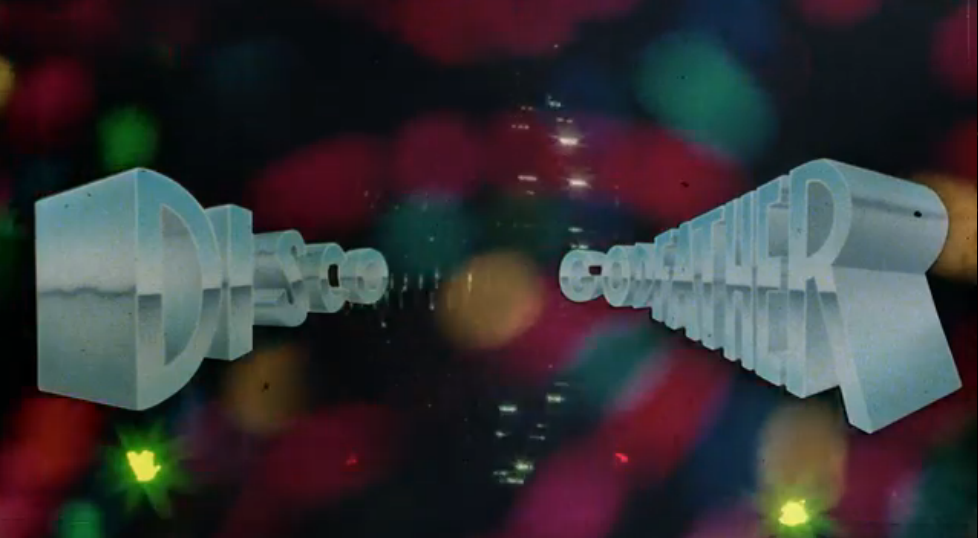
Disco Godfather (1979), by J. Robert Wagoner
PUT YOUR WEIGHT ON IT!! Rudy Ray Moore rocked the blaxploitation world in 1974 with the admittedly-flawed classic Dolemite. Dolemite, for those unaware, is about the titular criminal Dolemite, played by Moore, going after the bunch of no-business born-insecure rat-soup-eating motherfuckers who sent him to prison, led by Willie Green, the Baddest Motherfucker the World Has Ever Seen. While definitely not the first '70s blaxploitation movie, Dolemite is certainly the most recognizable, containing and creating many of the over-the-top camp tropes that would definitely the subgenre. Comedian Moore would go on to make Dolemite his stage persona and play permutations of the character over the course of several other blaxploitation films, including Dolemite's sequel The Human Tornado. Now I have seen both Dolemite films, and points to those who can guess what the third Moore flick I've watched is. And points to those who can deduce which of them is my favorite. Ding-ding-ding!
Disco Godfather tells the tale of Tucker Williams, aka the Disco Godfather, a former cop who now runs the local disco joint--for indeed, Moore's character is a true good guy in this one, being more a Godfather to the community, and not in any sort of ironic sense. The opening few minutes are an excuse for Rudy Ray Moore to show up in his extremely '70s sequined vest, and make goofy faces at the camera while wiggling his hips like a disco Elvis. It's pretty incredible. Anyway, Williams' nephew Bucky is getting himself caught up with some gangsters in the employ of Stinger Ray, the local PCP salesman. Bucky has a prosperous academic and athletic career ahead of him, but he's also quite fond of the dissociative high of phencyclidine. Inevitably his trip goes sour and he begins hallucinating the patrons of the disco club as zombies, hags, and skeletons, in one of the most amazing cinematic sequences ever. Seeing the effects of PCP in a personal way haunts Williams, and naturally, being a Rudy Ray Moore character and thus a hard-up motherfucker, he's going to take on this so-called "wack" with the skills he's picked up as a cop and a community organizer. Much of the movie features the Godfather putting together his "Attack the Wack" campaign, and before long you'll have heard character say "Attack the Wack" even more than you'll hear Moore's screech "Put your weight on it! Put your weight on it!" at his disco guests. All of this is intermixed with increasingly hallucinatory disco sequences, all leading to the best ending I've seen in a film this year.
Where to begin? Disco Godfather is a movie which enters the outrageous realm of self-parody while also sidestepping some of the vices that made Dolemite not so fun a ride for me. Dolemite is a movie that's famous because of its anarchy. It plays by no rules, including the rules of cinematic narrative. That's why when I first watched it I panicked when I realized the movie was done and I hadn't paid attention in over thirty minutes. Disco Godfather tries to be funny often enough to call it a comedy, and in that sense becomes chaotic, but what contains the movie as a whole is the fact that it never becomes any more outrageous than disco actually was. It is, if the lengthy dance sequences are any indication, some kind of disco porn. You're meant to bring a date to it, snort some coke over the end credits, and then go down to the club. Or something to that effect. I don't know what Rudy Ray Moore would want from us, but he'd want us to have fun.
And have fun we do. In a lot of ways, everything about this movie is pure camp. This is one of Moore's campiest roles, perhaps even campier than Dolemite, if nothing else because he's so absurdly gentlemanly. He's something sort of like how I'd imagine the Third Doctor if Doctor Who was an American show...brusque, curt, hard on the things he hates, but doing what he does out of heart and caring. The Attack the Wack campaign is a hilariously cheesy After School Special affair, sounding more like open warfare on masturbation than any sort of battle against drugs. I made a coke joke earlier, but in all seriousness: it is weird to think about an anti-drug campaign forming in a disco, of all places. Dance clubs attract young people which means there are bound to be many social activists in the club scene, so that's somewhat realistic to my mind at least, but a lot of the disco-goers of the '70s from what I know, at least the white ones, would probably have a lot of sympathy for someone who likes going all Night of the Chainsaw before hitting the floor. That's not to say that everyone who dug disco when it was alive slunk off to the bathrooms to shoot up (after all, drug problems were still yet to worsen in the club scenes as far as the 20th Century was concerned), but there's almost no time spent at all on the clientele's reaction to Williams' campaign outside of their appreciation and support. That gives the movie a decidedly optimistic slant, however, and I can totally dig that. Dolemite left us with harrowing images of heroin abuse; Disco Godfather shows us some hilarious exploitation psychedelia, thus generally confining its affair with drugs to the goofy side of whatever spectra govern the shape of drug films. Even the ending has a way out, as hopeless as it seems at first.
PUT YOUR WEIGHT ON IT!!! Disco Godfather is a liberating experience, an experiment in mood, humor, and sound. If you like your movies funky this will probably hit every spot you've got to hit. See it at once.
Monday, May 8, 2017
The Phantom Cowboy (1935), by Robert J. Horner
I realized quickly that one of the fastest ways to find which of the Golden Age B-Westerns were the most entertaining was to simply look for the ones considered to be the worst. Sinister Cinema says The Phantom Cowboy is the worst B-Western of their collection, and I can totally believe it. It didn't take long for me to realize I'd struck some sort of gold--my sources revealed that director Robert J. Horner is generally considered to be the absolute worst of the B-Western directors, having also produced The Border Menace, often listed as one of the probable nadirs of Westerns of this age. The man was something of a legend, it sounds like: missing his legs and one of his eyes, he was a career debtor who often solicited his actresses to go to bed with him. The Phantom Cowboy was his final directorial project before he died of cirrhosis in 1942. It's hard to imagine a world that would let The Phantom Cowboy into theaters today, but that means the film is all the more unique--indeed, it has been a long time since I've seen a movie so utterly bereft of so many kinds of quality.
A young woman named Ruth Rogers is robbed by the masked Phantom Bandit, whose mask even covers his eyes. "Hand over your family jewels!" the Bandit demands before riding off. Fortunately, she meets cowboy Bill Collins shortly after her ordeal. Bill comes with his own comic relief sidekick, Ptomaine Pete. Pete acts like a pirate and seems to have brain damage; he's played by Jimmy Aubrey, who seems to have played the same character in a bunch of other shitty Westerns, including The Border Menace. I think this is actually the hammiest performance I've ever seen, and possibly the worst performance I've ever seen as well. But God does it have energy. Anyway, after a swimming interlude, Bill and Pete meet the Phantom Bandit, who is Bill's double save for a ridiculous fake mustache. He explains that he's an "honest prospector" who only robs people at gunpoint "as a sideline." You see he has a rich uranium claim which local bandit Buck Houston has wanted to get after. In lieu of not turning him in for the reward money, he will pay the two to help him stop Houston.
Ruth Rogers, meanwhile, has found herself in trouble with Houston's gang--answering an ad calling for "schoolteachers," she has been drafted as a dance hall girl and perhaps also as a prostitute. On top of that, her brother Jack is in with the gang, and when his lighter is found at the site of an empty safe the gang was planning to rob, they beat the tar out of him, thinking that he robbed it early to keep the loot for himself. With a warning of spoilers--here's where things get weird. Eventually the Phantom decides to go after Houston, but is shot by him. As he is dying, Ruth grieves over him, thinking he's Bill (this is basically the only payoff for the whole "mysterious doubles" thing). However, Bill arrives, pursued by Houston, and the dying Phantom shoots and kills Houston. Not only do Bill, Pete, and Ruth get the Phantom's claim, but they also get the reward for technically finding him. But then the Phantom also reveals that he robbed the safe and framed Ruth's brother, which nearly got him killed. He explains that "it was the only way" to stop Houston, but that's fucking bullshit when all he had to do was shoot the man! Ah, well, Ruth and Bill don't seem to mind--and they get their Heterosexual Happy Ending.
Ah, this film. Every shot is cut either too early or too late, and this particular fault manifests almost immediately after the last opening credit rolls. The weird anti-art of the shot of the Phantom with his cloth draped across his face is a chronal echo of the chiropractic not-Bela of Plan 9 from Outer Space--it appears, vanishes, appears again. Combine this with nonexistent framing, blocking, and lighting, and you dive deep into a compositional nightmare. Every line is either badly written or poorly delivered. Our ostensible star, Ted Wells, is particularly egregious, reading this lines in seeming prescient imitation of none other than Torgo. Trust me, you have to hear it to believe it, especially when the Phantom is dying, and his voice changes depending on whether he's onscreen or not. The best explanation I can give for Wells' performance is that the actor got his start in the silent era, and therefore is unused to the idea of actually worrying about the tone and cadence of his voice. All the same, every second in which either Bill or the Phantom talks is a marvelous experience.
Watch this movie at least until a character offers Ruth "a little mountain dew." Then you will get to see the Phantom's aforementioned fake mustache, and how the movie dwells on it way more than it healthily should, including showing the Phantom "shaving" it off. He even calls it a beard at one point! It's great. This movie is great. Life can be good sometimes.
Subscribe to:
Posts (Atom)