Wednesday, April 10, 2019

Secrets of the French Police (1932), by A. Edward Sutherland


H. Ashton Wolfe was a strange writer. I can find virtually no biographical details of the man online, but he is known to me as an author of 1920s true crime lit which was probably only somewhat true. For example, in Wolfe's book Warped in the Making: Crimes of Love and Hate (1928), he tells two stories about the Parisian police's clashes with a larger than life Chinese criminal named Hanoi Shan. The story features Shan unleashing killer spiders and deadly poisons on the citizens of Paris--in a manner not dissimilar from Sax Rohmer's Yellow Peril racist stereotype Fu Manchu, whose stories were popular at the time. Indeed, comparing Wolfe's work to the pulp fiction of the era yields many more similarities that a comparison to late '20s true crime tales. This movie is ostensibly based on a series of stories by Wolfe which he claimed to be from the archives of the French Surete. I don't know if the French police ever had to deal with a cackling maniac armed with a basement Tesla coil who wanted to subvert the Communist regime of Russia with a royal pretender posing as Princess Anastasia Romanov. It's possible. I guess.

Meanwhile, we last saw director A. Edward Sutherland in command of a film which opens with Lionel Atwill sewing someone's mouth shut. He also committed a dark sin with the creation of The Invisible Woman, but we can let bygones be bygones. Because Secrets of the French Police is a sharp and fascinating film indeed.

We open at the funeral of the mysteriously-killed Brigadier Georges Danton, attended by his colleagues among the gendarmes of Paris. In case we missed the title card, his widow is told that he served the Secret police Secretly, and therefore is being buried in Secret. Using forensics they begin to look for the smokers of a special type of cigarette whose ash was found on Danton's corpse. They track it to a cigarette shop where we get an exceptionally bizarre vignette of a man who appears to be fucked up on meth getting mad over the cigarettes burning his mouth. He's supposed to be drunk, but his repeat exclamations of "FIRECRACKERS!!!!!" gets more and more surreal as time goes on. What makes this scene even stranger is the fact that it has no bearing on what follows.

Our real plot, when we do return to it, concerns a young pickpocket named Leon Renault, who is in love with a flower girl named Eugenie Dorain. Eugenie's father Anton despises that his future son-in-law is a criminal, but as we will learn, Monsieur Dorain has perversely good reasons for wanting his daughter to avoid the world of crime. You see, Anton used to be a criminal himself, as revealed by the mysterious man who comes to his apartment that night. Indeed, Eugenie isn't even his biological daughter, and it is entirely possible that Anton's "adoption" of her was a shady affair--the old man claims she was a war orphan in Russia (which raises some interesting questions as I'll explore below). But Anton does sincerely care about his adopted child and if he can spare her the horrors of his history he will. Unfortunately for him, he was friends with Brigadier Danton, and for that he must die.

The killer, whose belt buckle is actually a sheath for a knife, is a Russian General named Moroff. When we first meet Moroff he's saying something over the phone about Princess Anastasia, and how she will soon return. I started getting really excited for this movie when he mentioned the name, because whenever I hear a phrase from the conspiracy theory buzzword checklist that I totally have, my heart starts racing. "Illuminati," "Die Glocke," "the pyramids," "Kennedy"--now I'm lucky to have found a film which ticks off "surviving Romanovs." In case, Moroff's master plan, if you haven't guessed it, is tracking down a girl with a "Slavic" jaw who could be passed off as the supposedly-living Princess Anastasia, who was in our reality killed along with her family during the Russian Revolution. However, in case the girl is a poor actress or doesn't want to pose as fraudulent royalty, Moroff has trained himself in the arts of hypnotism, and trust me, it's way more hilariously pulpy than it sounds. It's really tempting to speculate that Moroff is meant to be a surviving Grigori Rasputin, just as it's tempting to consider Anton's story of Eugenie's origins meaning that she genuinely is Princess Anastasia (never mind that Anastasia was actually a Grand Duchess). I realize that latter point is more to explain the "Slavic jaw," but come on, do all Russians really look that similar? Do better, 1930s! What the emphasis on facial features also leads to is a face matching board used by the cops to come up with pictures of their suspects--pretty ordinary police work, a bit revolutionary in the 1930s, but for this movie they use a board which is ridiculously gigantic. The poor interns look so stupid looking for puzzle pieces to match to this thing as a guy called out a string of numbers and letters. This is the problem with making a police procedural: eventually, times will change so that your methods eventually look kinda silly. At least this wasn't made thirty years later, when they were showing us "the brand new computing machines" at their disposal. Even Batman knew it was hard to look cool using a '60s computer to solve crimes.

Moroff invites over the brother of the late Czar Nicholas II, the totally-not-fictitious Maxim Romanov. While initially Eugenie's act is decently convincing at first (if you get past the fact that she looks and acts about as lively as a zombie) but the sight of flowers is enough to break the hypnosis and drag her back to her old life. A slip in the act convinces Maxim that he's dealing with "a mental case," and ducks out on Moroff--but not before the General slips a note into his pocket claiming to be written by the Czar's brother, saying he believed Eugenie was Anastasia. Shortly thereafter Maxim and his chauffeur are driven off the road by an ingenious (but also ridiculously pulpy) movie screen projector, which simulates a car rushing towards oncoming traffic, and the plot against the Soviets goes on.

As an aside though, I do have to wonder--does Moroff legitimately think that Joseph fucking Stalin was going to hand over leadership of Russia to his cabal if somehow he did convince Maxim he had the real Grand Duchess on his hands? Really? More like Moronoff, dorogoy.

Eventually Leon, working with the police in exchange for a period where none of this thefts are stopped, breaks into Castle Moroff and nearly frees Eugenia when they are caught and brought down to the General's requisite torture-lab. Here, Moroff starts draining the girl of her blood, while he threatens Leon with a Tesla coil. I don't know what he intends to do with the Tesla coil, but it sure has Leon worried. But the police are right behind Leon, and their entrance is delayed only by the length of time it takes for an acetylene torch to get through a steel door.

Yeah, do you believe that happened in real life? You can say no, it's fine. If you do say no, you won't be alone. This movie is about as much of a true story as the Amityville sequels. I'm sure that it's possible to argue creative liberties, such as the fact that Leon has a well-developed personality that's too movie-perfect to be true--he never steals from Frenchmen, as he is a patriot who lost his entire family in World War I. But the difference between imagination and exaggeration can be a thin one when dealing with the tempestuous nebulousness that is "true crime." There's a strange blend of humor, horror, and stark, dour seriousness as we bounce from plucky Leon to Moroff's Gothic castle to the stiff procedural sequences. Ultimately this adds to a fun Pre-Code sum which is officially in my list of favorite unusual '30s movies. It's legitimately good, and where it isn't, it's at least captivating for other reasons. Give it a shot!

You can help support the site on Patreon, and like the A-List on Facebook to get updates!

Wednesday, April 3, 2019

The Oracle (1985), by Roberta Finlay


Roberta and Michael Findlay were trash legends, it's fair to say. They made The Touch of Her Flesh and its two sequels, a film series in which someone is vaginally assaulted with a lobster claw. (Not in all of the movies, just one. I think.) It's hard to imagine a married couple being inspired by the goddamn Olga films, and then going on to make classics like Snuff and Shriek of the Mutilated. Michael met a grisly end, being chopped to pieces by a helicopter in 1977, but Roberta kept on making horror into the late '80s. The Oracle is the first of these later outings that I've seen, but what I saw not only impressed me cinematically, but it worked as great trash too. This movie's pretty intense.

We open with some good ol' automatic writing being down by downtown medium Mrs. Malatesta. (Huh, wonder if her husband runs a Carnival of Blood--no, not that Carnival of Blood, I mean this one.) She has a ghost-planchette which is about to summon the spirits responsible for her demise; the planchette's new owner comes along shortly. Her name is Jennifer, and she's a friendly, ordinary woman who is married to world's biggest jerk. Men, if you constantly call your wife hysterical and embarrassing except for when you want sex, you're a stupid motherfucker and you should put your testicles under a jackhammer. Anyway, once the landlord, Mr. Pappas--who has a Greek name but acts like a Mexican stereotype--hands off the planchette, then Jennifer starts running into trouble. And not just because her dumb houseguests make the hand spell out "I am horny." Jennifer makes contact with the ghost of a murdered businessman named William Graham, who helps her uncover a conspiracy of murderers involving an evil factory manager and a trans male assassin named Farkas. And of course, no one believes her, or believes that she's sane.

This movie actually works really well as a commentary on how women are treated and gaslit in our society. At almost no point in time do any of Jennifer's friends or loved ones consider that she could be, y'know, telling the truth. They don't even consider that her paranormal experiences could be based on completely ordinary phenomena! Maybe it's bad writing--trust me, the dialogue is pretty goddamn bad, even if it's frequently hilarious--but the world is set against this poor lady as it is for many women in real life. It's a pretty crude form of dealing with a real issue, but crudeness is perhaps what's needed. Sometimes a sword will do, but other times a club just hits a little better. Apply a little reason, chaps! If your ladyfriend goes crazy on you there's probably a cause, and not just a tilting of the womb or whatever.

The theme is so blatant that I'm not really gonna spend that much time on it. IT'S TIME FOR TRASH INSTEAD.

Alright, so this movie really acts like it's two movies sewn together, Godfrey Ho-style. There's the occult stuff and there's the murders with Farkas. They come together at the end but it's funny how far apart they are. And how awkwardly they're cut together. In between scenes of Jennifer's Christmas Eve party are snippets from Farkas' murders. He hires a prostitute who he kills after she finds out about his genitals. He goes to a diner with the world's bitchiest waitress and takes an angry phone call from the diner's phone. ("Oh my God! He even ate the bones!") He also pops a Happy Hanukkah balloon--Nazi fuck. Maybe there's meant to be an intentional play between the fun of the party and stark '80s New York apathy of these other scenes. It's not played up that way, though. It feels more like someone just had an accident with the editing machine.

Incidentally. With that facial structure, that voice, that weight, the AFABness and the antisemitism--my God, Farkas is actually Crazy Fat Ethel, isn't he? He found his true self in that stock footage mental hospital from the end of Criminally Insane 2! I knew the story continued! Now we just need a movie explaining the Janowski family tensions between Ethel/Farkas and his sister, Edith Mortley RN.

Then there's the supernatural stuff. Pappas ends up with the planchette at one point, but he tries to use it to figure out the next day's lottery numbers. Because that's what communing with the dead is for. He is attacked by slimy rubber kids' toys, who start drinking his blood; when he tries to cut them off with a knife he just ends up mutilating himself instead. Then there's Jennifer's visions. She sees a shitty-looking corpse on TV, a clawed boogeyman at the window, and finally the zombie of her landlord. At the end there's another bad-looking rubber corpse who we get to see in even more detail. All they could afford was rubber and slime. Frankly though, that's all you need to make a great horror film.

There's just one more thing I want to comment on. When Jennifer says she has a surprise, her husband rolls his eyes and murmurs, "Antique pistols." What?! Why would he think that's what she had? Did he think she was challenging him to a duel? Is showing off one's antique pistols a common occurrence in this couple's social circle? I don't know why this baffles me so much. I can understand this from a first draft perspective--lord knows how many jokes or bit of dialogue I've written that have made sense in the moment but have proven baffling on the return run. (That's right, you guys get my good material. Crumble in despair as you consider how dire my bad shit must be.) But this was just odd. Odd in a way that I love, naturally, but odd all the same.

If you like slime and communicating with the dead, then this is the movie for you. It actually feels like a "real" thriller at times, before someone opens their mouth and says something. Professionalism is on display. But not everywhere. It's that precise and unique dichotomy that really matters.

You can make reviews like this happen via Patreon! And you can like us on Facebook to get updates!

Wednesday, March 27, 2019

The Curious Dr. Humpp (1969), by Emilio Vieyra and Jerald Intrator


So, uh, there's no way the director of this film didn't see The Awful Dr. Orlof. Or Atom Age Vampire. Or The Corpse Vanishes. Fuck, there's a lot of goddamn glandsploitation movies! But The Curious Dr. Humpp differs from them in a variety of key ways. Namely, it's one of the more bizarre variants on the glandsploitation genre, throwing a bit of The Brain That Wouldn't Die into the mix--but with an actual brain this time!

Dr. Humpp is a researcher who forces his hideously (and hilariously) disfigured monster-goon assistants to kidnap young people to have a lot of sex. Not to have sex with; it's complicated and I'll get into it. In an astonishingly overlong opening segment, we witness one of the blatant man-in-the-mask mutants kidnap a pair of lesbians, an alcoholic dude, a masturbating hypersexual lady, a hippie foursome, and a stripper. All of them except for Outlier Alcoholic Man are young and attractive and improbably keep their makeup on at times. We know how young and attractive and made-up they are because we watch each of them (except the alcoholic) engage in sexual behavior for prolonged periods of time. The stripper is so sexy she makes a saxophone player cum in his pants! Huh, it's starting to seem like a movie called The Curious Dr. Humpp is a softcore porn or something. It transpires, in the bare excuse for the plot, that Dr. Humpp is making his victims have sex after consuming a smoking, bubbling potion. This somehow produces another smoking, bubbling potion (eww), which Humpp ingests to stave off a mutation such as that which has consumed his assistants. But also, the bad doctor's research is being used to the benefit of a preserved brain in a jar who schemes to conquer the world!

That's a big "but also." The copy I watched was in Spanish with no subs, and so while I could make out enough to tell what was happening, I'm pretty sure the Jar Brain was added in last second. He really doesn't have a bearing on the plot (if they are a he). However, he is much more memorable than our cop protagonists. Considerable time is spent trying to make this one cop into the hero, and it doesn't work, because he's just there to make it feel like a krimi. Speaking of krimis, and, consequently, Edgar Wallace, that's what makes me feel like this could have come from Jesus Franco circa 1962. Cops are just crammed in here because they'd be crammed into an Edgar Wallace adaptation. True, they are cheap protagonists, but I can't help but feel like the creators of this film were going for something particular in terms of style and genre. Interestingly, there were scenes set inside Dr. Humpp's complex which made it feel like a prison movie. It never lingers long enough to count, and the prisoners never interact with each other in a meaningful way, but they could have changed genres and it would have been a natural flow.

Let's talk about Dr. Humpp himself. He looks like Adam West and has a hot wife who's really into masochism. Outside of sex-sauce experiments they also cut open the heads of their mutants and stick hot metal in them to make smoke come out of their eyes. The Humpps have a lot of these mutants! When the cop breaks into the facility he's confronted by a whole army of them. I wish I knew why Humpp was himself turning into a mutant, or what caused the mutant outbreak through the lab. Maybe Humpp worked at the '60s incarnation of the Umbrella Corporation. Or perhaps it was merely fate, for Humpp seems to go out of his way to make his potions foam and sizzle unnecessarily, and he also keeps a skull on his desk. He is clearly evil, or mad, at the very least. On top of this, he gets sex hallucinations when he drinks his splooge-serum, which may or may not be manifestations of his own psyche. That doesn't actually support the idea that he's evil and so evil things happen around him, I just wanted to bring it up because I love me some good ol' psychedelic sex hallucinations. In living black-and-white!

Dr. Humpp is a minor work in the annals of trash, but the title alone is indelible. I've known about this movie for as long as I've been watching exploitation junk, and I'm happy to have actually seen it now. Long stretches of it will put you to sleep (YES WE GET IT THE PEOPLE ONSCREEN ARE FUCKING) but it makes a surprisingly funny double feature with Awful Dr. Orlof. I mean, c'mon, there are Astro-Zombies who look more convincing than this movie's monsters! And seriously--how many movies are there where someone takes someone's glandular fluids and uses them to create a scientist potion?! I just keep finding more! It's really disturbing, especially since few of them have Howard Vernon in them. Much less his dick.

Anyway. Take a look at the poster for this if you aren't swayed into viewing. Yes, the monster does actually look like that. Worse, even. The poster omits the fact that the monster's eyes aren't exactly synced up--he doesn't gaze down on someone like that, and you'll know what I mean when you see it for yourself. Today's a Wednesday, so have a happy Humpp Day.

You can help support my movie habit on Patreon, and like the A-List on Facebook to get updates!

Wednesday, March 20, 2019

The Stud (1978), by Quentin Masters


This movie was pitched to me as "British Saturday Night Fever." What?! Not only are the plots completely dissimilar, but before this movie, the idea of a British disco movie struck me as being about as likely as dubstep in Puritan times. Well, I can now finally have a double feature with Disco Godfather. You have no idea how glad that makes me.

The film opens with a surprisingly catchy disco song that I had stuck in my head for--well, actually, it's still in my head, and I think I first saw this movie, like, a year ago. The only lyrics consist of "Ooh--Stud! What's his name, what's his game?" It implies immediately that we're dealing with a man of mystery; one who we've already seen to be the recipient of dozens of signed photographs from beautiful women that allude to his tremendous sexual prowess. The man in question is Tony Blake, the manager of a club called "Hobo" which is owned by the wealthy Fontaine Khaled. Fontaine is married to a diplomat, Benjamin Khaled, who is unaware of Fontaine's many affairs. Her favorite is Tony, who we learn she "made," training him in management, class, and sex. She says of him, "You know, when we first met, he thought a 69 was a bottle of scotch!" Fontaine has sex with Tony in an elevator where she's hidden secret cameras. Not only does she enjoy watching the tapes for her own satisfaction, but she uses the tapes to advertise Tony to her friends. She's planning a big trip to Paris, where Tony is the intended centerpiece of a massive orgy. He isn't to know until the last minute, though, an unnecessarily rape-y twist that shows off that Fontaine is a libertine in the style of de Sade. She loves wealth for wealth's sake, even though that wealth has left her bored enough where she's bound to completely collapse if she doesn't have sex constantly. The Paris plot develops slowly and runs parallel to a thread which has Tony trying to open his own club, so he can be free of Fontaine forever.

Of course, we also get plenty of eyefuls of the action at Hobo. (That actually is the worst nightclub name I've heard, ever.) We have Tony's pedo friend who "waits for 'em to get off the schoolbuses"; we have Molly, a black woman who Fontaine (the white bitch) calls "an interesting creature"; then there's the seemingly endless "disco" song which mostly chants, "Let's go, disco, let's go disco." That last bit is probably the funniest thing in the whole movie--I mean, I laugh at music from all eras, and I especially like laughing at the music I like. But disco can get so goddamn goofy sometimes. I'm on the floor every single time I realize that the fucking song has been playing for like seven solid minutes.

Tony hates his situation. Sure, he gets laid more than any other man in London who's not David Bowie, but even his conquests from outside Fontaine's social circles fully know about his place on the ladder. Molly calls Tony a gigolo, and while he's frankly a sexist pig, Tony knows that it feels wrong to be used. When Ben Khaled comes down to Hobo to visit with his wife, Tony falls in love with--or makes himself fall in love with--Ben's daughter from a prior marriage, Alex. Alex is turned on by Tony, even and perhaps especially after she learns that he's fucking her stepmother. Her own boyfriend is so no-sex-before-marriage that her attempts to make out with her are met with confusion and disgust. So she and Tony sleep together and something of a relationship starts. But then Christmas comes. It's time to go to Paris.

And oh my God, I'm glad movies exist, because you'd never see this in real life. Fontaine's Parisian friend has a gigantic sex-mansion, complete with what is probably the world's hardest-to-maintain swimming pool. Have you seen Caligula, or at least, Brad Jones' review of it? I immediately thought of Tiberius' grotto during this scene, albeit less ridiculous. I mean, the place has a fucking sex-swing on it! Anyone who is into sex-swings or fucking in pools is in the right because there's nothing wrong with what you're into (as long as it's not animals or children). However, I'm going to speak from my own personal perspective and set of kinks, when I say: 1) sex-swings sound extremely painful and dangerous; 2) fucking in a pool sounds even more extremely painful and dangerous because YOU DON'T WANT TO GET CHLORINE INSIDE YOUR FUCKING GENITALS. Also, orgies in a pool? Get ready for some floaters. Brrrrr.

Inevitably, Mr. Khaled learns about his wife's dealings, because that's usually what happens when you create dozens of sex tapes featuring yourself and your extramarital lover and store them in your husband's house. Tony is on his way out, because surprise, being drugged with amphetamines and raped is incredibly disturbing to him. At least Fontaine burns with him--or does she? I guess we'll have to find out in The Bitch! Because yes, this did get a sequel.

Thank Disco God!

Not only does The Stud offer us a fascinating glimpse into the British side of disco, but it's a pretty progressive movie for a film full of homophobic slurs and ruthless misogyny. It depicts the rape of a man with the same sort of gruesome focus as many movies of the period where women are raped. In fact, that's one of the central themes: that men, too, are harmed by patriarchy, because they're expected in all senses to be fuck machines. And naturally, not every man wants to be a fuck machine--in the sense of having sex frequently and/or intensely, or in the sense of being a genuine machine, so slavishly dedicated to his base desires that he'll accept anything that comes his way. And it does so in a way that doesn't show all women as monsters; only the characters in-universe are sexist. Everyone in this movie is pretty much awful, or at best severely obnoxious. Nearly everybody is a pedophile, a rapist, a racist, or just cruel for no reason. The richer you get, the bitcher you get. And this is a movie about the super-rich.

The dialogue is very pointy and sometimes it gets ridiculous. People talk about how snappy and dire Valley of the Dolls is, but Valley of the Dolls just made me a bit sleepy if I can be frank. This movie has about as many barbs as a drag show, but the costumes aren't nearly beautiful enough--it is a good-looking film, even if it never does anything too bold with the visuals. As far as the barbs, though, you do need to have a high threshold of tolerance, for both acid and camp. It's like if the Adam West Batman villains could say fuck.

Overall, The Stud has much to offer and its 3.6 on IMDB perplexes me. The movie made a good deal of money when it came out, and contemporary reviews were positive, it seems. I mean, it does deal with some dark topics, particularly that of male rape. Why would a film about male rape get such low reviews? Surely that's not a reflection of any aspect of our society? Hmmmmmmmm...

Like the A-List on Facebook to get updates, and please consider supporting the site on Patreon!

Wednesday, March 13, 2019

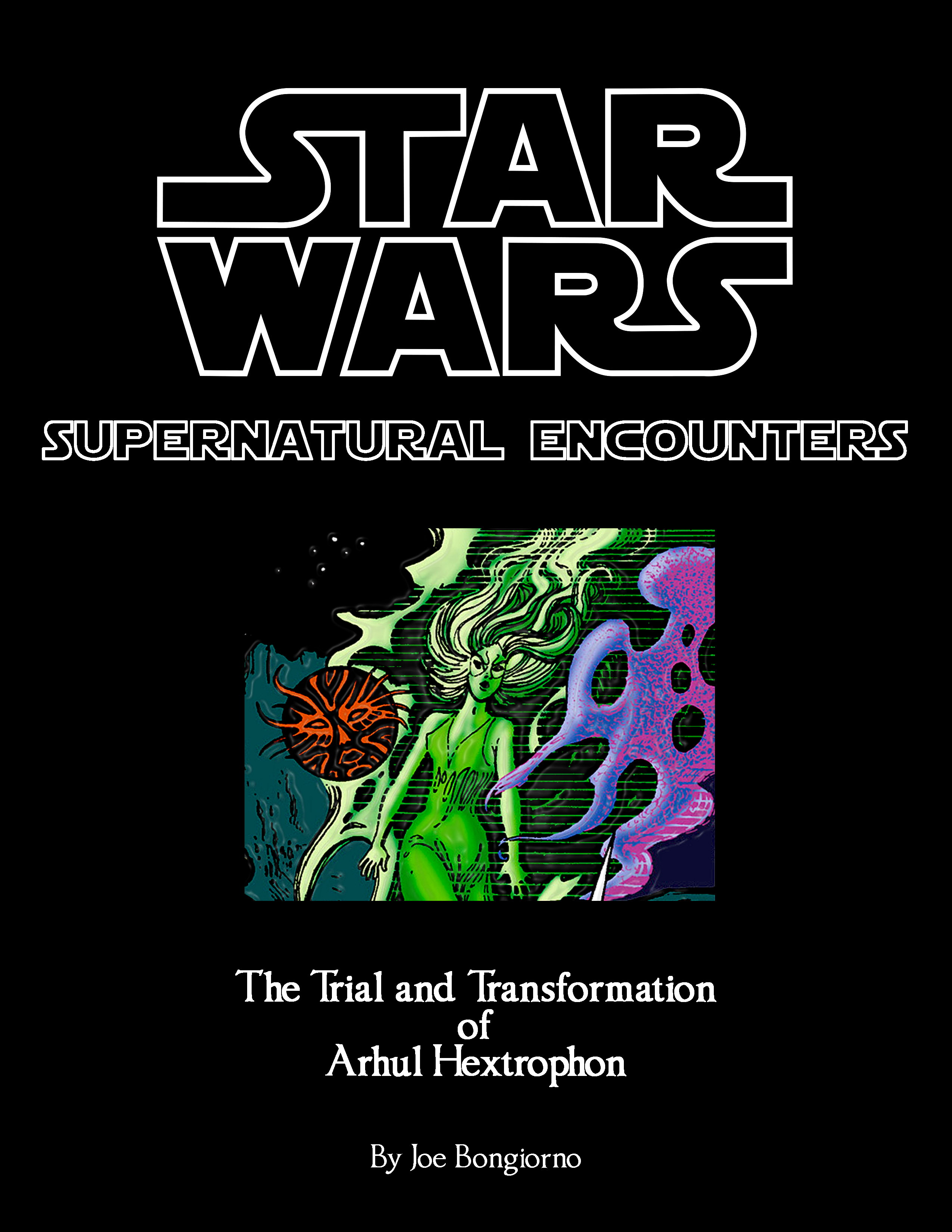
Continuity Cavalcade #2 - Supernatural Encounters in the Star Wars Universe


Joe Bongiorno has turned out one of the most continuity-heavy Star Wars Legends pieces yet! And you'd better believe that it turns everything you know about Star Wars upside-down.

You can get early access to the podcast on Patreon (www.patreon.com/AdamMudman) and like us on Facebook (www.facebook.com/MudmansAList) to get updates!


Image Source: www.starwarstimeline.net

Wednesday, March 6, 2019

Doctor Death (1989), by Webster Colcord


* And yes, this is the best screencap I could get of the title card with my tech limitations.

"For some, the end of the world was just the beginning." So opens Webster Colcord's 19-minute Super 8 post-apocalyptic epic, Doctor Death! Kinda the message for the times, huh? Well, it was the message of the '80s, too, when Mad Max clones were all the rage. We were two years away from the end of the Cold War when this film emerged, but that didn't mean the ostensible nuclear threat was over. Still, I doubt that Mr. Colcord was taking the idea of nuclear armageddon overly seriously. How could he, when he turned out pure goodness like this? For only a teenager could imagine and actualize such cinematic glory.

Dr. Death is our football-helmet-wearing, schoolbus-driving post-nuke marauder. Because it's the end of the world, there's nothing to do but toss Molotov cocktails and grenades at all visible passerby, and at any cows unfortunate enough to have survived the fury of mutually-assured destruction. The Deathmobile is destroyed by an agent of the Mutant Police--are those cops who police mutants, or are they cops who are mutants? The guy Death runs into while running from the officer is definitely a mutant. He looks a surprisingly-better version of some of the alien extras from Turkish Star Wars. TVs remind our hero of the world before the bomb, so he smashes them with a pickaxe. Then it's down to more murderin'--this time, he runs down a fellow whose friend calls in a mutant bounty hunter. The bounty hunter dresses like the killer from Nail Gun Massacre and has a rocket launcher in his wheelchair. During his fight with the bounty hunter, DD gets knocked onto a nuclear bomb, which has an oh-so-convenient activation button right on the top. We get see to Doctor Death's face melt off. This doesn't kill him, as melty-face Doctor Death shows up at the end with the magic of (really good) stop motion.

Super 8 was an astounding medium, because it enabled kids and adults the world over to make movies with real film, yo. Hell, it let them make home movies in general! There's just something nice about Super 8's grunginess, a permeating nostalgia that affects even those of us who didn't grow up with it. A generally silent medium, many Super 8 movies are either dubbed or have music and sound effects only. Doctor Death is no different, containing only grunts, screams, explosions, gunshots, and an endless supply of homemade '80s Casio themes. Ultimately, a film like this needs no dialogue; just some labels and text cards to let us know where we are. For people who like their cinema straightforward, I'm not sure you could streamline a movie more than this.

Themes? What themes? These are teenagers we're talking about! Kids Goofing Off is enough of a theme by itself. There's a certain innocence to the gruesome violence of teenagers. Perhaps they are the only ones we can excuse for capital-W Wallowing. In some ways, teenagers are expected to Wallow. But Wallowing can get you far, y'know? Webster Colcord now has a pretty solid-looking visual effects career, having worked on the X-Men films, Minority Report, and Stranger Things. We all start somewhere. And this is a great debut.

For something this small and cheap, the direction, editing, and effects are all very top-notch. Shots are framed intriguingly all the time. The transitions are made of explosions or chilled fade-ins. The mutants look like mutants, and the explosions are astonishingly rendered via damaged/blown-up film stock, as if the flames of the blast are enough to burn the medium it's shot on. This movie is dressed to impress, and you really should see it. If I haven't "sold" this movie enough to you, I want to let you know that Colcord gives a role credit to his puppy, "Misty the Wonder Dog," even though she does not appear outside of the end credits.

You can help support the A-List on Patreon! And you can like our Facebook page to get radical updates!

Wednesday, February 27, 2019

Carnival of Blood (1970), by Leonard Kirtman


Let's take a step away from the Great Vorelli's unnecessarily disturbing stage shows, to focus instead on another type of entertainment: the carnival. In the '70s, Coney Island was a gruesome place, where creepy, chipped-paint mannequins laughed at you from the scummy, fingerprint-stained booths. Carnival of Blood is a bit less clean than Devil Doll, but it's also slightly more self-aware in how it portrays its women.

After opening with a song from someone who seems to be trying quite hard to sound like Joni Mitchell, we meet a pair of couples. One of them I'll talk about first simply because they are not long for this movie--or this world. They do not have a good marriage, evidently, and fight bitterly all across the carnival. Eventually, they end up in the tent of the carnival's fortune-teller, who calls Ortega on them I mean foresees something bad for them in her tarot cards. They blow her off, and they next arrive at a dart-and-balloon stall managed by Tom, a mild enough man who nevertheless is willing to give the pair a free prize to make them go away. The dude wants to go home but the girl drags him to the Tunnel of Love, where she is messily parted from her head amidst the Willy Wonka-esque voyage through the dark. Exeunt Couple #1.

Our Main Couple, then, consists of Dan and Laura. The former has made his way to the position of assistant DA, and so he proposes to his longtime girlfriend. Unfortunately, their relationship is fraught with difficulty as Dan relentlessly obsesses over catching the Coney Island killer. When Laura complains about their problems to Tom, he simply tells her that fighting of any kind is awful in a relationship. Note the tone of voice he uses when they discuss this--it will important later.

Before Laura's chat with Tom, however, a drunken sailor and a young woman he's accompanying--presumably a sex worker of some kind--stop by Tom's stand. Tom is accompanied at this locale by his sweeper, "Gimpy," who is mentally disabled and sports a made-up face that looks like it lost a fight with an octopus. (For those of you who care, this is Burt Young's first cinematic appearance.) When the sailor and his girl get too annoying, Tom once more buys them off with a prize. The two wander around the carnival for way too fucking long, a stretch of the film significantly impaired by the sailor actor behaving much more like a man OD'ing on ecstasy and meth than a drunkard. They end up at the fortune-teller's, where she once again sees something awful in the cards and tells them to go home. Instead they choose to keep on wandering pointlessly. The sailor clumsily tries to steal the girl's purse, they start to have makeup sex but then don't for some reason, and the girl is stabbed and relieved of her intestines. We then cut back to Tom, who is wondering where Gimpy went off to. Uh-oh--well, turns out that he went missing because Tom went missing. Gimpy gets upset because Tom isn't supposed to leave him alone, to the mercies of the customers. To make it up to him, Tom asks Gimpy to join him for a beer at his apartment, which is full of creepy googly-eyed teddy bears. Yet despite the eeriness of Tom's accommodations, it's evidence against Gimpy that grows here, because he ends up telling an unnerving tale of how he once had "a good dog" who "went bad, so [he] had to kill him." Gimpy repeatedly crying, "I had to kill him, Tom!" is simultaneously spine-chilling and hilarious.

All this time, our Main Couple is still investigating the park and also fighting each other. We are diverted from them once again by a rando park customer, an extremely rude and noisy middle-aged lady. As with everyone before, she goes to visit the fortune-teller, who again foresees something terrible about to happen via her tarot deck. Then she has a run-in with Tom where she's rude as a Trump supporter to him and Gimpy. Sure enough, further down the boardwalk, the screeching old harpy gets her tongue and eyes torn out, and her head crushed with a brick.

Something finally actually happens with Dan and Laura, which is that Dan decides that it's funny to don a monster mask and rush at a woman who witnessed the aftermath of a gruesome murder. It gets worse. He wants her to go back to the park right away so she can get over her trauma, so that he "doesn't have a hysterical woman on [his] back for the rest of [his] life." Then he calls her self-centered. What a fucking cock. Laura ends up going to cry on Tom's shoulder, but he's aggravated by the unrest in their relationship, and when she says she vandalized the teddy bear Dan won for her, he calls her a slut "like all the rest." No one fucks with teddy bears around Tom. Still, when she runs off, he tracks her down and apologizes. Then, when he has locked in a ride, he starts calling her Mommy, and says he has to kill her. Ohhh, dear...Tom tried to warn Gimpy when he said that his parents used to fight. Now Gimpy is dead, and Laura is about to join him.

And in the end, the villain turns out to be disfigured, too, wearing a somehow-perfect mask. What a trip. Most people cite this movie's value as residing in its vintage footage of a now forever lost Coney Island. However, I found the story and the characters to be pretty damn entertaining too. There's so much unintentional trash humor here that I love returning to this movie whenever I can. And I think it has a message too--one which subverts its surface-level misogyny. In every case save for that of the fortune-teller, misogyny is used to establish the various suspects as possible killers, which extends even to Dan. I can't imagine Dan got better after this movie, even after Laura presumably told him about Tom's backstory as per her ride with him. But ultimately, the same disgust towards women and fear of them having sex proves to be the motivation behind Tom's slayings. There's no doubt that hatred of women is on the side of evil, even though the protagonist also insists on instigating it. There's a lot of sympathy held for Laura in the film, though, and I don't think she's just a piece of meat. Note too that Tom has every reason to want to kill the men in the relationships he targets. The guy from Couple #1 is just as bitchy as his wife, the sailor is literally just babbling drunken nonsense nonstop, and Laura specifically points out that Dan started all the trouble in her relationship. But to Tom that stuff is invisible because he has double standards. A woman abused him as a child, true, but he latched onto the fact that said woman cheated on his father as his motive. It's not the deepest examination of the hypocrisy of patriarchy I've seen, but it's clear that the movie isn't just conforming to tropes either.

Honestly, though, even if you don't care about that thematic stuff, Carnival of Blood is a boatload of fun for people looking for hilariously low-quality films. The gore is some pretty sweet H.G. Lewis-type stuff, and you simply won't believe Burt Young as Gimpy. Give it a shot if you haven't already.

You can follow the A-List on Facebook to get updates, and help keep the site running via Patreon!